

India’s space journey has been nothing short of awe-inspiring. Over the decades, the country has become a formidable force in space technology and research, all thanks to the dedicated scientists, visionaries, and leaders who believed in India’s potential. One of the crucial institutions in this mission is the UR Rao Satellite Centre (URSC), named after one of India’s most distinguished space pioneers, Dr. Udupi Ramachandra Rao. Located in Bengaluru, URSC plays a pivotal role in building India’s satellites, supporting countless missions, and nurturing innovations that extend beyond our atmosphere. To truly understand URSC’s significance, we must dive into its history, milestones, and the people who helped make India’s space dreams a reality.

The Beginnings of UR Rao Satellite Centre
The UR Rao Satellite Centre wasn’t always the center of excellence it is today. Initially established as the ISRO Satellite Centre (ISAC), it was later renamed in honor of Dr. U.R. Rao, a revered space scientist who led ISRO’s advancements in satellite technology. Under his guidance, ISRO transitioned from building sounding rockets to designing and launching satellites capable of communications, weather monitoring, and scientific exploration. Dr. Rao’s vision was not merely about reaching space but using space technology to bridge India’s digital divide, connect rural and urban populations, and provide crucial data for development.
Crafting Satellites: URSC’s Core Mission
At its core, the UR Rao Satellite Centre is responsible for designing, building, and testing the satellites that support India’s diverse missions. It is here that India’s remote sensing satellites, communication satellites, and experimental satellites are developed. In fact, over 300 satellites have been built within these walls. Each satellite is a testament to India’s ingenuity, advancing its capabilities in various fields from weather forecasting and disaster management to telecommunications and GPS navigation.
The complexity and precision involved in satellite design are immense. Each satellite undergoes extensive tests, from structural evaluations to thermal analyses, ensuring they can withstand the harsh conditions of space. To make these processes efficient, URSC employs cutting-edge technology, including clean rooms, high-precision testing equipment, and simulation labs. The center also collaborates with other institutions worldwide, embracing an ethos of shared knowledge and innovation.
Human Stories Behind the Technology
Behind every satellite launch, there’s a team of scientists, engineers, and technicians who pour their hearts into their work. Their dedication, often involving late nights and missed family gatherings, is what drives the UR Rao Satellite Centre. The employees at URSC are not just building machines; they are scripting stories of resilience, innovation, and ambition.
Imagine the anticipation and anxiety before a satellite launch—the culmination of years of effort, testing, and hopes. Every successful launch brings an eruption of emotions at URSC, where each team member sees their dreams soar into space. It’s the embodiment of human aspiration and the belief that the sky is not the limit—it’s just the beginning.
SP Kosta: The Deputy Director of India’s First Satellite Aryabhata
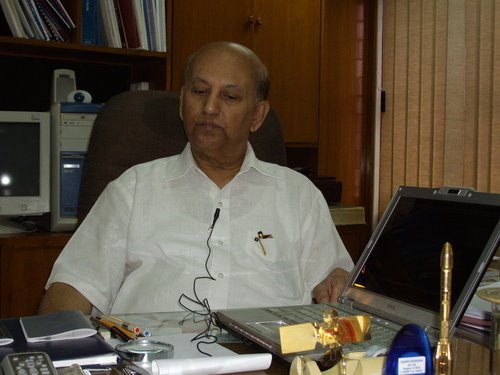
One of the key figures in the early days of India’s space program was SP Kosta, the deputy director of Aryabhata, India’s first satellite. Born in 1934, Kosta was a brilliant scientist and engineer, known for his methodical approach and profound commitment to the Indian space mission. Aryabhata was a groundbreaking achievement for India, a symbol of self-reliance in a field previously dominated by a few nations. SP Kosta’s work alongside Dr. U.R. Rao was instrumental in realizing this vision, and the successful launch of Aryabhata in 1975 marked a historic moment for India.
Kosta’s journey was a testament to the power of determination and ingenuity. Hailing from a modest background, he rose to prominence due to his exceptional technical skills and strategic thinking. His work on Aryabhata laid the foundation for future satellite programs, inspiring generations of scientists to pursue careers in space technology. His legacy lives on at URSC, where his contributions continue to inspire advancements in satellite design and operations.

Biography of Shiv Prasad Kosta
Major Milestones of UR Rao Satellite Centre
URSC’s journey is lined with milestones that have helped propel India’s space program to new heights. Here are some of the most notable achievements that underscore its importance:
- Aryabhata (1975): India’s first satellite, Aryabhata, was launched in 1975, marking the beginning of India’s self-reliant journey in space technology. It was a collaboration between India and the Soviet Union, with URSC playing a vital role in its development.
- INSAT Series (1983): The Indian National Satellite (INSAT) series became a game-changer for telecommunications, meteorology, and broadcasting in India. With URSC’s expertise, India could launch satellites that connected millions of people across the nation.
- IRS Series (1988): The Indian Remote Sensing (IRS) satellite series has been a crucial asset for Earth observation. From tracking agricultural productivity to assessing natural disasters, these satellites provide invaluable data, making India one of the world’s leaders in remote sensing.
- Chandrayaan-1 (2008): India’s maiden moon mission, Chandrayaan-1, was a significant achievement for ISRO and URSC. This mission confirmed the presence of water molecules on the moon’s surface and showcased India’s technological prowess in planetary exploration.
- Mangalyaan (2013): India’s first interplanetary mission to Mars, Mangalyaan, was another feather in URSC’s cap. India became the first nation to reach Mars on its first attempt, thanks to the groundbreaking work done at UR Rao Satellite Centre.
- NavIC (2018): The Navigation with Indian Constellation (NavIC) is India’s answer to GPS, offering accurate positioning services within India and the surrounding region. Developed by URSC, NavIC has critical applications in maritime navigation, disaster management, and even in everyday smartphone usage.
URSC and the Future of Indian Space Research
Looking to the future, the UR Rao Satellite Centre has ambitious plans. The center aims to create more advanced satellites with better imaging, higher data transmission rates, and extended life spans. Additionally, URSC is integral to India’s mission to explore deeper into space, with plans for lunar and interplanetary missions.
URSC is also focusing on satellite miniaturization and developing constellations of small satellites to provide real-time data on various fields, from agriculture to disaster management. This vision aligns with ISRO’s goal of making space technology more accessible and valuable for societal benefits.
Furthermore, as India opens its space sector to private players, URSC’s role is expected to expand. It will not only guide new startups and private enterprises in satellite technology but also collaborate to bring India’s space capabilities to the global market. The center’s work with private companies is anticipated to foster innovations, create new job opportunities, and put India on the map as a global hub for space research and development.
Human Impacts of URSC’s Work
One might wonder—why do we invest so much in space when there are pressing issues on Earth? The answer is that space research, especially through institutions like the UR Rao Satellite Centre, has a direct impact on our lives. Satellites designed at URSC aid in disaster management, track weather patterns, and monitor crops, thus supporting farmers and protecting citizens from natural calamities. The communication satellites developed at URSC connect remote areas, enabling education, healthcare, and economic opportunities that were once unimaginable.
India’s remote sensing satellites, crafted by URSC, provide critical data for planning infrastructure, monitoring pollution, and managing resources. Each image transmitted from these satellites helps decision-makers, scientists, and farmers make informed choices, improving the lives of millions.
A Legacy of Innovation and Inspiration
The UR Rao Satellite Centre embodies the spirit of Indian innovation. From its early days, working on the first satellites like Aryabhata, to today, with ambitious plans for interplanetary missions, URSC represents a journey fueled by a desire to make a difference. Every launch, every satellite, and every discovery is a reminder of the relentless pursuit of knowledge that Dr. U.R. Rao and his team set in motion.
In a world that constantly changes, URSC stands as a beacon of continuity, a bridge between India’s aspirations and its achievements. It is a place where dreams take shape, propelled by science, dedication, and the belief that what we do in space has the power to make Earth a better place. The UR Rao Satellite Centre is not just a satellite-building institution; it is a tribute to India’s resilience, ambition, and undying pursuit of knowledge. As long as URSC continues to innovate and inspire, India’s space story will soar to new heights, reaching further, dreaming bigger, and bringing the world closer to the stars.
Leave a Reply to Father of Indian Space Program: The Visionary Legacy of Vikram Sarabha Cancel reply