

Many colleges treat green work as a side activity. There is a tree drive in July and a plastic-free day in October. Then the accreditation file opens, and the proof is thin. That gap is costly, because sustainability outcomes in NAAC now have a place of their own in the new framework.
This guide is for principals, IQAC coordinators, NAAC coordinators and trustees. It explains what the 10th attribute asks for, which eco-audit metrics matter, and how to build evidence that a reviewer can verify. It is practical. You can use it to plan the next twelve months.
Why Sustainability Is Now a Quality Issue
Green work is no longer a feel-good extra. Rising power bills, water stress and waste rules hit college budgets every month. Students and parents also notice clean, efficient campuses. Regulators and funders want to see responsible use of public and private money.
Accreditation reflects this shift. If you are new to the process, start with our step-by-step guide on how to get NAAC accreditation. Then return here to plan the sustainability layer. Together, they give you a complete picture of what reviewers will test.
What Is the 10th Attribute in NAAC?
NAAC is moving from the old seven-criteria model to a binary and maturity-based system. In the draft mapping that many institutions now use for preparation, the tenth area is Sustainability Outcomes and Green Initiatives. Preparedness manuals shared by several autonomous colleges list it as Criterion 10 in a set of ten.
A small caution. The new portal is still being rolled out, and final formats may change. Our explainer on the NAAC new accreditation system 2025–26 covers the structure and transition rules. Always confirm the latest notice on the official NAAC website.
The old framework tested green work inside Criterion 7. It looked at energy, water, waste and green audits. The new approach asks a sharper question: what changed because of your green work? The key word is outcomes.
Why Outcomes Matter More Than Activities
An activity is something you did. An outcome is something that improved. A tree drive is an activity. A rise in tree cover, backed by survival data, is an outcome.
A reviewer looks for three things in every green claim:
- Baseline: where you started, with a dated figure.
- Action: what you did, who did it and what it cost.
- Result: what changed, shown in numbers.
The new system also checks institutional data against national records. Loose claims will not hold. Numbers, dates and signed reports will. This is one reason good colleges still lose marks. Our post on why colleges fail in NAAC accreditation explains the pattern in detail.
Core Eco-Audit Metrics Every College Should Track

Eco-audit metrics turn a green claim into proof. Track the six areas below every month, not just before a visit.
1. Energy use
Record monthly electricity units for each building. Divide the total by the number of students and staff to get a per-person figure. Track the share of solar or other renewable power. Compare this year with last year. The Bureau of Energy Efficiency publishes guidance on energy audits and efficiency ratings.
2. Water use and conservation
Measure daily water use with meters. Note your rainwater harvesting capacity in litres. Record recycled water, borewell recharge and leak repairs. A simple water balance sheet shows where every litre goes.
3. Waste management
Log waste by type: wet, dry, plastic, e-waste, hazardous and biomedical. Keep agreements with authorised collectors. The Central Pollution Control Board lists waste rules that apply to institutions, so check them before you sign any contract.
4. Green cover and biodiversity
Count trees and plant species. Mark native species separately. Track the survival rate after one year. Add geo-tagged, dated photos to every plantation record.
5. Carbon and transport
Estimate your carbon footprint from power, fuel and travel. Record cycle racks, shared transport and charging points for electric vehicles. Even a rough estimate is better than none, if the method is written down.
6. Curriculum and community
Count students enrolled in environment courses. List eco-club events and village outreach. Show what learners gained, not only how many attended.
| Metric | Evidence to keep | How often |
|---|---|---|
| Energy | Electricity bills, sub-meter logs, solar generation log | Monthly |
| Water | Meter readings, rainwater pit records, recycling log | Monthly |
| Waste | Segregation register, collector agreements, disposal receipts | Weekly |
| Green cover | Tree register, species list, survival count, geo-tagged photos | Quarterly |
| Carbon | Footprint sheet, fuel bills, transport records | Yearly |
| Awareness | Course lists, event reports, feedback forms | Per event |
A sample outcome statement
Here is an illustrative example of how a strong entry reads. Replace the figures with your own verified data. “In 2025–26, the college cut electricity use per person by 11 percent against the 2023–24 baseline. It did this by switching to LED lights, adding sub-meters and installing a 50 kW rooftop solar plant. The audit report, bills and generation logs are attached.”
Notice the pattern. It names a baseline, an action and a measured result. It also points to proof. Every green claim in your file should read this way.
Green Initiatives for Colleges That Reviewers Respect

Good green initiatives for colleges do not need a huge budget. They need a plan, a calendar and records. Group your actions into three tiers and pick two or three from each.
Quick wins (low cost)
- LED lighting and motion sensors in corridors
- Colour-coded waste bins in every block
- Water refill stations and a campus plastic ban
- Paperless office and e-circulars
Mid-level projects
- Rooftop solar with a generation log
- Rainwater harvesting pits with capacity records
- Vermicompost or biogas unit for canteen waste
- Dense native plantation with a care schedule
Long-term goals
- A written net-zero or carbon-neutral roadmap
- Green building upgrades for new blocks
- Sewage treatment and water reuse for gardens
- Partnerships with local bodies and NGOs
Your faculty can also turn this work into research. Case studies built on campus data suit many science and management journals. Mantech Publications supports research paper publication for authors who want to share such findings.
Linking Green Work to Teaching and Research
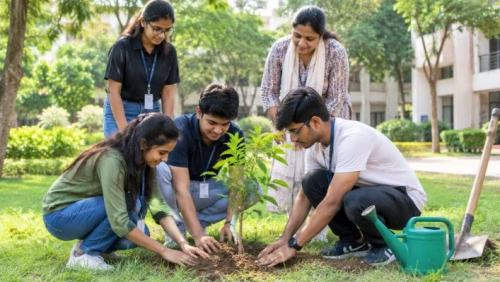
Sustainability outcomes are stronger when they reach the classroom. Add short environment modules to existing courses. Ask students to run small audits for their own departments. Count each project and record what it saved.
Research adds weight too. Faculty can study local air quality, water reuse or waste recovery and publish the results. Current literature helps them frame good questions, so a journals subscription for your library is a useful support. Published work also feeds the research and innovation side of your file.
Campus Infrastructure That Supports Sustainability
Good campus infrastructure makes green habits easy. A bin is useful only if it is placed where people walk. A meter is useful only if someone reads it. Review your buildings against this checklist:
- Sub-meters on every building and hostel
- Rainwater harvesting pits with capacity and cleaning records
- A waste segregation yard with covered storage
- Solar panels with a monthly generation log
- A sewage treatment plant or greywater recycling
- Shaded walkways, native trees and clear green signage
- Charging points and cycle parking
Infrastructure also shapes how students choose a college. Platforms such as Bhavya Gyan’s college listings show how learners compare campuses on facilities. A visibly green campus helps both accreditation and admissions.
Step-by-Step Blueprint for a Certified Campus Green Audit
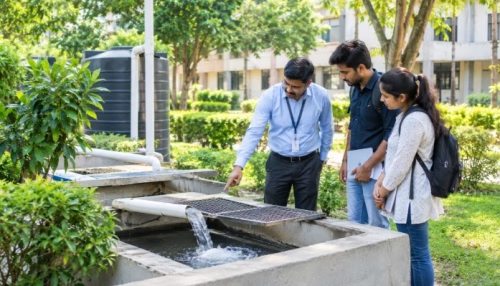
A green audit is the backbone of your evidence. Follow these seven steps in order.
- Form a green committee. Place it under the IQAC. Name members, roles and a meeting calendar.
- Adopt a green policy. Get it approved by the governing body. Keep the signed copy and the minutes.
- Collect baseline data. Gather up to three years of bills, logs and registers. A tidy digital evidence repository saves weeks here.
- Hire a qualified external auditor. Ask for credentials, past reports and field instruments. For energy audits, ask for a BEE-certified energy auditor.
- Run the audits. Many colleges keep three separate reports: green, energy and environment. Each report should list findings and recommendations.
- Act on the findings. Prepare an Action Taken Report with dates, budgets and before-and-after photos.
- Publish and review. Upload the reports in a clear web section, as our NAAC website compliance checklist explains. Repeat every year.
Ready to start?
Who Does What? Building a Whole-Campus Team
A green audit cannot sit with one person. Share the work, and write down who owns each task.
- Principal and governing body: approve the policy and the budget.
- IQAC coordinator: track the calendar, data and final file.
- Estate and maintenance staff: read meters and keep logs.
- Faculty: link topics to courses and guide student projects.
- Students: run the eco-club, count trees and report leaks.
- Alumni and local partners: support plantation, waste recycling and awareness.
When many hands contribute, the outcome is stronger. It also shows reviewers that sustainability is part of the culture, not just a report.
How to Build Evidence That Passes Verification

Strong work fails when files are scattered. Build one evidence pack for sustainability outcomes in NAAC and keep it updated all year. A good pack holds:
- The signed green policy and committee orders
- Meeting minutes with action points
- Baseline data and yearly comparison sheets
- Audit reports and Action Taken Reports
- Geo-tagged photos with dates
- Invoices, work orders and collector agreements
- Certificates, MoUs and event reports
Name each file by metric, year and type. Match every number with your AQAR, AISHE entries and website. Our guide to best practice documentation shows how to present a green initiative as a clean, reviewable case. You can also browse ready documentation checklists to speed up the work.
Not sure your files will pass?
Common Mistakes That Cost Marks
- Photos with no date, place or caption
- One-day events with no follow-up
- An audit report with no action taken
- Numbers that differ across AQAR, website and reports
- A copied green policy that does not fit your campus
- Leaving students out of the process
Most of these are easy to fix. They are rarely a lack of effort. They are a lack of structure. Read about other frequent problems in this guide to common documentation gaps in colleges.
A 12-Month Action Plan for the 10th Attribute

- Months 1–3: Form the green committee, approve the policy and collect baseline data.
- Months 4–6: Install meters, set up waste segregation and start the tree register.
- Months 7–9: Complete the external audits and share findings with the governing body.
- Months 10–12: Close the Action Taken Report, upload files and review results against baseline.
Your IQAC team needs skills as well as files. Bhavya Gyan Academy’s IQAC management and NAAC preparedness course is designed for principals and IQAC heads who lead this kind of work.
Want expert help with the 10th attribute?
Talk to the BGC NAAC consultancy team or message BGC on WhatsApp for a quick first discussion.
Conclusion
Passing the 10th attribute is not about big spending. It is about measured, documented change. Set a baseline, act, measure again and keep every record in order. Colleges that start now will walk into the new framework with proof instead of promises.
Start small this week. Name your green committee, read every meter once, and open one evidence folder. Small, steady steps build the strongest record over three years.
FAQs:
They check measurable results of a college’s green work, such as energy, water, waste and green cover.
NAAC expects proof of environmental practices. Audit reports are the strongest proof, so most colleges conduct them.
A qualified external auditor. Use a BEE-certified energy auditor for energy audits and ask for past reports.
Keep three years of records. Draft guidance for the new framework uses a three-year assessment period.
Yes. Start with LED lights, waste segregation, water meters and plantation records, then add solar later.
Every year. Yearly data shows trends, and trends prove real outcomes.
External Resources
- NAAC – National Assessment and Accreditation Council: official notices and manuals
- Ministry of Environment, Forest and Climate Change: national environmental policy
- Bureau of Energy Efficiency: energy audit and efficiency guidance
- Central Pollution Control Board: waste and pollution rules
- UN Sustainable Development Goals: global sustainability targets
Leave a Reply