

Sunita Williams, a name that resonates with pride and inspiration, represents the vastness of human potential and the courage to explore the unknown. Her journey in space, Sunita Williams in Space, has made waves worldwide, especially in India, where her achievements hold a special place in the hearts of many. Through her groundbreaking missions with NASA, she has become a role model for aspiring astronauts and a testament to the power of dedication and resilience. Her connection to her Indian roots and her extraordinary achievements also highlight the shared dreams and aspirations of space enthusiasts across the globe. In the backdrop of institutions like the UR Rao Satellite Centre, which has made critical contributions to India’s space programs, Sunita Williams’ story shines as a reminder of the possibilities that lie beyond our planet.
Sunita Williams: A Legacy in the Making
Born on September 19, 1965, in Euclid, Ohio, Sunita Lyn Williams grew up with a passion for adventure and discovery. Her father, Deepak Pandya, an Indian-American neuroanatomist, and her mother, Bonnie Pandya, instilled in her a strong foundation in education and curiosity.
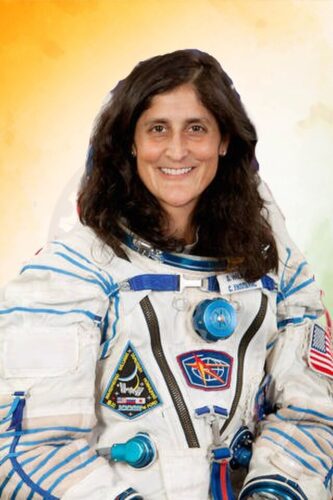
Williams graduated with a Bachelor of Science degree in Physical Science from the United States Naval Academy in 1987 and earned a Master of Science in Engineering Management in 1995. Her journey toward space began with her role as a helicopter pilot for the U.S. Navy, a testament to her bravery and skill.
Sunita’s journey to the stars began in 1998 when she was selected as a NASA astronaut candidate. This decision marked the beginning of an extraordinary career that would not only see her soar to unimaginable heights but also break records, inspire countless individuals, and pave the way for future space explorers.
Sunita Williams in Space: Historic Missions
Sunita Williams embarked on two major space missions during her career, each contributing significantly to space exploration. Her first mission to the International Space Station (ISS) was in 2006, where she served as a flight engineer on Expedition 14/15. During this mission, she spent an impressive 195 days in space, setting a record for the longest single spaceflight by a woman at that time.
Her achievements during this mission extended beyond endurance; she completed four spacewalks, totaling over 29 hours outside the ISS. Her dedication and courage were evident as she tackled various challenges in zero gravity, advancing humanity’s understanding of life in space and how the human body adapts to extended periods in microgravity.
Her second mission took place in 2012, when she returned to the ISS as part of Expedition 32/33. This time, she not only served as a flight engineer but also became the first woman to command an ISS mission. Williams once again showcased her resilience and commitment by setting yet another record: she accumulated over 50 hours in spacewalks, solidifying her position as one of NASA’s most experienced astronauts.
Overcoming Challenges in Space
Life in space is no easy feat, and Sunita Williams faced numerous challenges during her missions. From maintaining mental and physical health in isolation to working in microgravity conditions, every day presented unique tests. Williams, however, approached these challenges with unwavering positivity and a growth mindset.
She also shared that one of her biggest challenges in space was staying connected to her roots and family. Through her connection with Earth, Sunita kept herself grounded, making phone calls to family and sharing her journey with people around the world. This emotional connection allowed her to stay centered and balanced, reflecting her inner strength and determination to fulfill her mission.
Sunita Williams’ journey symbolizes what humans can achieve in space, but her story is only part of a larger narrative of space exploration, one that includes the Indian space program. In India, the UR Rao Satellite Centre has played an instrumental role in advancing space science. Named after Dr. Udupi Ramachandra Rao, a visionary space scientist, this center is ISRO’s primary facility for building and managing satellite technology.
The UR Rao Satellite Centre has developed several pivotal satellites that aid in telecommunications, weather forecasting, and scientific research. Just as Williams’ journey embodies the spirit of space exploration, this facility represents India’s commitment to exploring new frontiers in science and technology. Its contributions to missions like Chandrayaan and Mangalyaan have demonstrated India’s growth in space research and bolstered the nation’s reputation in the global space community.
The Role of SP Kosta in India’s First Satellite Launch
Another significant figure in India’s space journey is SP Kosta, the deputy director of India’s first satellite, Aryabhata. Born in 1934, SP Kosta was a dedicated scientist who contributed immensely to India’s satellite research. He held a pivotal role in the development and launch of Aryabhata in 1975, marking a milestone in India’s space history.
Aryabhata’s successful launch symbolized India’s entry into the satellite age, representing the hard work and vision of scientists like SP Kosta. As the deputy director, he was responsible for overseeing the satellite’s design, engineering, and successful deployment. His work paved the way for India’s self-reliance in space technology, a legacy that is carried forward by institutions like the UR Rao Satellite Centre.

Biography of Shiv Prasad Kosta
Sunita Williams: An Inspiration for the Next Generation
Sunita Williams’ achievements have inspired millions worldwide, especially young women interested in science and space exploration. Her story serves as a reminder that with hard work, perseverance, and the courage to pursue one’s dreams, anything is possible. Her connection to her Indian heritage has been a source of pride for Indians across the globe, who view her as a beacon of possibility.
Through her outreach efforts, the story of Sunita Williams in Space has connected with students and space enthusiasts alike, encouraging them to dream big and stay committed to their goals. She has shared insights about her life in space, the challenges of long-duration missions, and the importance of teamwork and resilience.
Looking Ahead: Space Exploration and India’s Growing Role
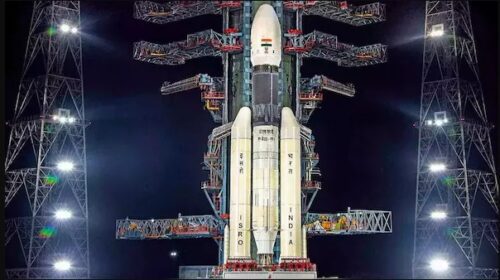
Sunita Williams’ remarkable career has left a lasting impact, setting a high standard for those who will follow in her footsteps. As she paves the way for future astronauts, India’s space program continues to grow. The upcoming Gaganyaan mission, India’s first human spaceflight mission, is a testament to the nation’s commitment to human space exploration.
Institutions like the UR Rao Satellite Centre are essential to this journey. As India prepares for Gaganyaan, its goal of sending Indian astronauts into space reflects not only a desire to advance scientific knowledge but also the aspiration to contribute to humanity’s understanding of the cosmos. The center’s contributions to satellite technology, along with other ISRO initiatives, enable India to actively participate in global space exploration efforts.
Embracing the Cosmos: The Shared Dream of Space
Sunita Williams’ journey is a testament to human curiosity and resilience. Her accomplishments have not only broken records but also bridged connections between nations, cultures, and aspirations. Her story represents the dreams of those who gaze up at the night sky, wondering what lies beyond.
In India, the achievements of Sunita Williams in Space resonate deeply, reminding the nation of its own potential and space exploration ambitions. With the support of institutions like the UR Rao Satellite Centre and the contributions of scientists like SP Kosta, India’s space journey is marked by dedication, perseverance, and a shared dream to explore the unknown.
The Limitless Potential of Space Exploration
Sunita Williams’ career is an inspiration to those who dream of the stars. Her determination, bravery, and commitment to scientific exploration have established her as a role model for aspiring astronauts and space enthusiasts worldwide. Her journey serves as a reminder of what is possible when we reach for the unknown and push the boundaries of human potential.
In the world of space exploration, each mission, satellite, and astronaut story builds upon the work of those who came before. Just as the UR Rao Satellite Centre continues to advance satellite technology, and SP Kosta’s legacy paved the way for India’s early space successes, story of Sunita Williams in Space adds another chapter to the inspiring story of human space exploration. Her life and achievements serve as a reminder that with dedication, the universe holds infinite possibilities waiting to be explored.
Leave a Reply to 10 Parenting Advice Tips for Raising Happy and Healthy Kids Cancel reply