
In 1975, India took a giant leap into the cosmos with the launch of its first artificial satellite, Aryabhata. This monumental achievement was not just a technological triumph, but a moment that stirred the hearts of millions of Indians. The name “Aryabhata” is forever etched in history, signifying India’s entry into the global space race and sparking a sense of national pride that remains alive today. As India’s first artificial satellite orbited Earth, it symbolized a nation’s determination to rise and be counted among the spacefaring countries.
But beyond the technical data, the launch of Aryabhata evokes an emotional connection. It represented the dreams of a young nation still finding its place in a rapidly advancing world. Behind this dream were brilliant minds like Dr. SP Kosta, the deputy director of the Aryabhata project. His contributions, along with countless others, made India’s first artificial satellite not just an object in space, but a symbol of hope, ambition, and scientific prowess.
Aryabhata: India’s First Satellite Name Inspires Millions
India’s first satellite is named after the ancient Indian mathematician and astronomer Aryabhata, a fitting tribute to one of the earliest pioneers of scientific thought. This choice of name carried immense significance. Just as Aryabhata had once charted the stars, calculated planetary motions, and laid the foundations of astronomy in ancient India, the satellite now bearing his name set the stage for modern India’s space exploration.
India’s first artificial satellite wasn’t just a machine sent into orbit—it was the embodiment of a long-standing tradition of scientific inquiry. The fact that India’s first satellite is named after Aryabhata added a deeper emotional resonance. It reminded people that space exploration wasn’t a foreign concept to India, but part of its legacy. It connected the country’s illustrious past to its innovative future.
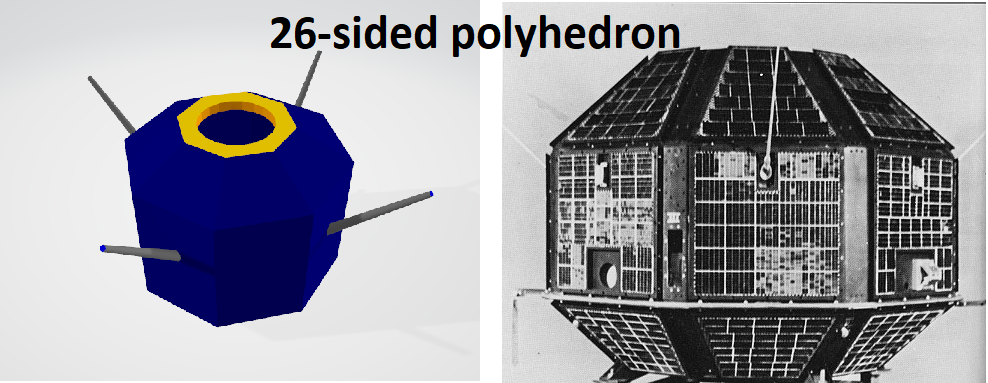
The Importance of Aryabhata: A Game Changer for India
For the average citizen in 1975, the name Aryabhata likely evoked a feeling of pride and achievement. It marked India’s first foray into space technology, a monumental shift from being a developing nation to becoming a formidable player on the global stage. The satellite, launched on April 19, 1975, from the Soviet Union, ushered India into an elite club of spacefaring nations.
The significance of this moment was enormous. For a country still grappling with poverty, food security, and development challenges, Aryabhata demonstrated that India was not just focused on solving immediate issues but was also reaching for the stars. The satellite was symbolic of progress, signaling to the world that India had the intellect, talent, and resolve to build its future.
SP Kosta: The Visionary Behind the Satellite
In the vast history of space science, some names shine a little brighter. Dr. Shiv Prasad Kosta, more commonly known as SP Kosta, was one of the unsung heroes of India’s space journey. As the deputy director of the Aryabhata project, his role was pivotal in ensuring that India’s first artificial satellite became a reality. Born with a deep passion for science and technology, Kosta’s work laid the groundwork for many future endeavours in space and electronics.
SP Kosta, the visionary who contributed immensely to India’s technological landscape, was known for his passion for indigenous innovation. His career began with humble origins, but his sharp intellect and deep knowledge led him to play a significant role in Aryabhata’s development. Inspired by Vikram Sarabhai, the father of India’s space program, and working under Director UR Rao, Kosta’s contributions were instrumental in turning Aryabhata from a concept into a successful mission.
What set Kosta apart was his foresight. He believed that India’s space ambitions needed not only global collaboration but also strong indigenous expertise. Aryabhata, India’s first indigenously built satellite, stands testament to his vision. While it was launched using Soviet technology, much of the design, research, and development was done in India, proving that the country was capable of standing on its own feet in space technology.

Aryabhata: A Milestone of Indigenous Innovation
For a nation as vast and culturally rich as India, Aryabhata represented much more than just scientific progress. It was an emotional and nationalistic achievement. When people ask, “What was the name of India’s first indigenous satellite?” it’s often with a sense of awe. The word “indigenous” here is crucial. Aryabhata was not only a product of Indian scientific talent but also an assertion that India could dream big and achieve even bigger.
This was an important message at a time when India was still building its reputation as a technological power. Aryabhata’s successful launch showed the world that India could develop and launch its own satellites, using its own talent and resources. This pride in indigenous capability would fuel further advancements, paving the way for ISRO’s future triumphs like the Chandrayaan and Mangalyaan missions.
What is India’s First Satellite Name?
For anyone searching the web with the query “What is the name of India’s first satellite?“, the answer is simple—Aryabhata. But the impact of Aryabhata is far from simple. It set off a cascade of developments that shaped India’s space journey for decades to come. It inspired a generation of scientists, engineers, and dreamers. For children growing up in the 70s, Aryabhata wasn’t just a satellite. It was proof that India could do the unimaginable.
This satellite functioned in full capacity for five days, but those five days were enough to change the course of India’s space journey. Although technical issues cut its mission short, the launch itself was a resounding success, sparking confidence in the Indian Space Research Organisation (ISRO). The organisation used the satellite for many years for developing spacefaring expertise. It showed that India had the potential to play on the global stage when it came to space exploration.
India’s First Artificial Satellite: Aryabhata’s Impact on Future Generations
Even today, Aryabhata continues to inspire. As India’s space program has grown, launching hundreds of satellites and even missions to Mars, Aryabhata remains a powerful reminder of where it all started. It’s not just about answering the question, “Which is India’s first artificial satellite?” It’s about understanding the spirit of innovation, perseverance, and collaboration that Aryabhata represents.
In schools across India, Aryabhata is still celebrated. Science textbooks reference it as the pioneering project that brought India into the space age. For young minds, reading about India’s first artificial satellite Aryabhata is often their first encounter with space science, sparking curiosity about the universe and India’s role in exploring it.
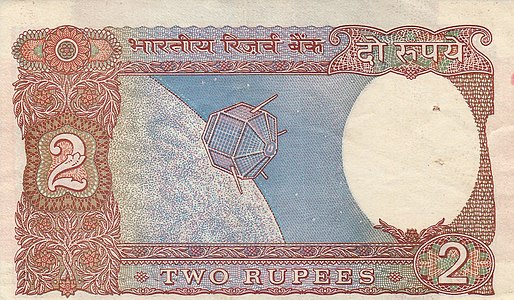
The Global Impact of Aryabhata
Aryabhata’s launch wasn’t just a turning point for India, but it also had a significant global impact. At the time, the global space race was dominated by superpowers like the United States and the Soviet Union. For a developing nation like India to launch its own satellite was a remarkable feat. It sent a message that space was not the exclusive domain of the rich and powerful—it was open to any nation with the will to explore.
This created a ripple effect across the world. Aryabhata’s success inspired many other developing nations to invest in their own space programs. It showed that space technology was not just for scientific advancement but could also have tangible benefits for development, education, and national pride.
Challenges Overcome: The Road to Aryabhata
Creating Aryabhata wasn’t without its challenges. India was still grappling with poverty, food security, and infrastructure issues. Yet, there was a collective resolve to push forward with the space program. When people ask, “What was the name of India’s first indigenous satellite?” it’s crucial to understand the immense effort and collaboration that went into making Aryabhata a reality.
The satellite was built in a relatively short period, but the challenges—financial, technical, and logistical—were significant. Despite the hurdles, the team’s dedication never wavered. There were moments of doubt, of course, but the commitment to launch India’s first artificial satellite never faltered. It’s these human stories of perseverance and passion that make Aryabhata more than just a machine in space.
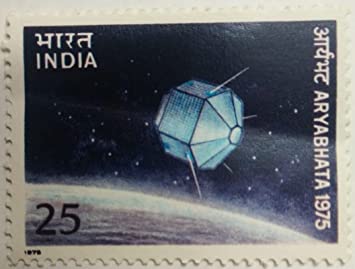
SP Kosta’s Continued Influence
After the success of Aryabhata, SP Kosta continued to play a vital role in India’s technological advancements. His work extended beyond space science to telecommunications, electronics, and even education. As one of India’s pioneering technologists, his influence can be seen in many of the country’s subsequent innovations. Kosta’s biography is a fascinating tale of a man who never gave up on his dream of seeing India rise as a technological power.
SP Kosta believed in empowering young scientists and technologists. His legacy lives on not just in the machines that he helped build but in the countless lives he touched through his mentorship and vision. For him, Aryabhata was just the beginning of a long journey toward making India a leader in science and technology.

A Symbol of National Pride
To this day, India’s first satellite name Aryabhata holds a special place in the hearts of Indians. The satellite may be long gone, but its legacy continues to shine brightly. When people look up the question, “India’s first satellite is named after?” they are not just searching for a name—they are searching for the story of how a young nation defied the odds, reached for the stars, and succeeded.
The emotional resonance of Aryabhata goes beyond the technical achievements. It’s about pride, about a nation coming together to achieve something remarkable. As India continues to make strides in space exploration with missions like Chandrayaan and Gaganyaan, the story of Aryabhata will always serve as a reminder of where it all began.
In the end, Aryabhata was more than a satellite—it was the embodiment of India’s dreams, ambitions, and aspirations. The satellite’s name may answer the question “What was the name of India’s first indigenous satellite?”, but its impact goes far beyond a mere label. It marked the beginning of a new era for India—a time when the nation proved to the world and to itself that it was capable of achieving greatness in science and technology.
Inspiring the Next Generation of Space Scientists
The legacy of Aryabhata isn’t just confined to history books or the halls of ISRO. It lives on in the dreams of young Indians who aspire to follow in the footsteps of the country’s pioneering space scientists. For many, Aryabhata serves as a beacon, symbolizing that no dream is too big, no goal too distant.
When schoolchildren across India learn about “what is the name of India’s first satellite,” they are introduced not only to the technical aspects of space science but also to the idea that perseverance and teamwork can overcome even the most daunting challenges. Aryabhata is a symbol of what can be achieved with dedication and collaboration, and it continues to inspire the next generation to reach for the stars.
In many ways, Aryabhata is the heart and soul of India’s space program. As India’s first satellite name, the emotional weight it carries is palpable, whether in classrooms, scientific institutions, or even among everyday citizens who remember the pride they felt when India made its first mark in the sky.
A Lasting Tribute to Aryabhata the Astronomer
The decision to name India’s first artificial satellite after Aryabhata, one of India’s greatest scholars and mathematicians, was a tribute not only to the man himself but also to India’s rich tradition of intellectual achievement. Aryabhata, the astronomer, made groundbreaking contributions to mathematics and astronomy, including the accurate calculation of the value of pi and the theory that the Earth rotates on its axis.
Just as Aryabhata the mathematician revolutionized the understanding of the cosmos in ancient India, Aryabhata the satellite opened the doors to space exploration in modern India. The two Aryabhatas—one of the past and one of the present—are linked by a shared desire to push boundaries, explore the unknown, and expand the limits of human knowledge.

The Everlasting Legacy of Aryabhata: The Inspiration from India’s First Satellite Name
When people ask, “Which is India’s first artificial satellite?” or “What is the name of India’s first indigenously built satellite?” the answer they receive is Aryabhata. But Aryabhata is more than just a name or a satellite—it is a symbol of India’s resolve to rise and lead in the global space arena. It reflects the vision of pioneers like SP Kosta, the leadership of ISRO, and the collective effort of countless individuals who believed that India could achieve the impossible.
Aryabhata’s launch was a defining moment, not just for India’s space program but for the entire nation. It represented the birth of a new era, where India became a key player in the scientific community. Its legacy endures, not only as a technical achievement but also as a testament to the power of dreams, dedication, and indigenous innovation.
As India continues to make remarkable strides in space exploration, Aryabhata will always remain the shining star that first illuminated the path forward. It serves as a reminder of where we started and how far we’ve come—a legacy that continues to inspire and uplift a nation striving for the stars.
Leave a Reply