

Progress Since India’s First Indigenously Built Satellite
In the grand tapestry of India’s rise as a technological and economic powerhouse, the domain of space technology has emerged as a beacon of national pride and strength. From the early days of launching simple satellites to becoming one of the world’s few spacefaring nations, India’s progress in space technology has not only fueled innovation but has also played a critical role in enhancing the country’s national security. In today’s interconnected world, the significance of satellites in defense and strategic capabilities cannot be overstated.
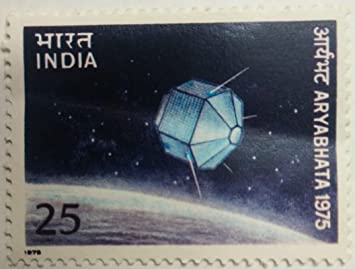
India’s journey into the space age began with the launch of India’s first satellite, Aryabhata, in 1975. This indigenously built satellite marked the beginning of a legacy that would grow to include not only space exploration and communication satellites but also powerful defense and reconnaissance satellites that ensure India’s security in an increasingly volatile global environment.
The Importance of Satellites in Modern Defense
In the 21st century, wars are no longer confined to borders, land, or even air. Today, the battlefield extends into space. Nations rely on satellites for a variety of defense applications, including real-time surveillance, secure communications, navigation, and missile defense. India, recognizing the growing importance of space in defense, has made significant investments in developing its satellite infrastructure for strategic purposes.
Satellites, with their ability to provide a bird’s-eye view of the earth and capture high-resolution imagery, have become essential tools in monitoring borders, tracking enemy movements, and managing natural disasters. Not only for these applications, they play a crucial role in guiding missile systems, ensuring secure military communications, and even detecting potential threats such as incoming ballistic missiles.
As India continues to grapple with complex security challenges, including cross-border tensions and terrorism, satellites have become indispensable to the nation’s defense apparatus.
The Role of Reconnaissance Satellites
India’s space technology program has been heavily invested in developing reconnaissance satellites capable of providing high-resolution images of potential adversaries’ movements. Satellites like the Cartosat series have proven invaluable in gathering intelligence on both military and civilian infrastructure. These satellites, equipped with powerful cameras, can monitor enemy bases, track troop movements, and provide real-time data during operations.
One of the major advantages of using satellites for reconnaissance is their ability to operate beyond national borders. Unlike aircraft or drones, which require clearance to enter another nation’s airspace, satellites orbit the earth and provide unrestricted access to global intelligence. This capability gives India the upper hand in tracking and responding to potential threats at any moment.
India’s First Indigenously Built Satellite: Aryabhata’s Role in National Defense
India’s foray into space technology began with the historic launch of Aryabhata, India’s first indigenously built satellite, on April 19, 1975. Named after the ancient Indian mathematician and astronomer, Aryabhata signified the dawn of India’s space ambitions. Though its primary purpose was scientific research and conducting experiments related to space science, Aryabhata laid the foundation for future endeavors that would merge space technology with national security.
The satellite was launched aboard a Soviet Kosmos-3M rocket from Kapustin Yar, a site located in the then-Soviet Union. Aryabhata’s launch not only demonstrated India’s capability to develop its own satellite but also marked the beginning of India’s self-reliance in space technology. The lessons learned from this mission helped ISRO (Indian Space Research Organisation) evolve and develop satellites that would play critical roles in defense applications in the years to come.
SP Kosta: The Visionary Behind Aryabhata
One cannot discuss India’s early space success without mentioning Shiv Prasad Kosta, or SP Kosta, the deputy director of India’s first satellite project, Aryabhata. Director UR Rao trusted Kosta as he found in him a visionary scientist and engineer. SP Kosta was instrumental in shaping India’s initial steps in space technology. His biography, The Satellite Man, outlines the challenges and triumphs of the Aryabhata mission, providing a glimpse into the determination and passion that drove the team to success despite the limitations they faced.

Kosta’s role extended beyond Aryabhata. His contribution to India’s satellite programs had a lasting impact on the country’s defense capabilities. Under his leadership, the foundation was laid for future satellite missions that would serve dual purposes—scientific research and national security. SP Kosta’s work not only helped India achieve technological independence in space but also ensured that the nation could defend its sovereignty using indigenous space technology.
India’s Satellite Program and Strategic Defense
In the decades since Aryabhata’s launch, India’s satellite program has grown in both scope and ambition. The launch of India’s first multipurpose satellite, INSAT-1A, in 1982, marked a significant leap forward. The INSAT series of satellites have since been used for various purposes, including telecommunications, broadcasting, and meteorology. However, these satellites also play a crucial role in ensuring communication for defense operations, particularly during natural disasters or national emergencies.
One of the most significant advancements in India’s defense satellite capabilities came with the launch of GSAT-7, also known as Rukmini, in 2013. Dubbed the “Indian Navy’s Eye in the Sky,” GSAT-7 provides real-time surveillance and communication support to the Indian Navy. This satellite has proven to be a game-changer for naval operations, enabling secure communication across vast distances, especially in the Indian Ocean region, where India has key strategic interests.
More recently, the launch of EMISAT in 2019 further enhanced India’s defense capabilities. EMISAT is designed to monitor and track enemy radar installations, providing critical intelligence that can be used for strategic decision-making and countermeasures.
Space Technology and National Security in a Changing World
As India’s geopolitical landscape continues to evolve, the role of satellites in defense becomes even more critical. India shares complex borders with both China and Pakistan, and tensions in these regions have often necessitated rapid responses from India’s defense forces. The ability to monitor borders using satellite technology has helped India stay one step ahead in terms of preparedness and strategic planning.
One notable example is the Balakot airstrike in 2019. During this operation, Indian satellites played a pivotal role in gathering intelligence, tracking movements, and guiding airstrikes with precision. The success of the mission was a testament to the crucial role of space technology in modern warfare.
Cross-border tensions are only one of India’s national security concerns, as the country also faces threats from terrorism, internal insurgencies, and cyber warfare. Satellites serve as a key tool in providing real-time intelligence, enabling secure communication, and ensuring that defense forces have the information they need to act swiftly and effectively.
The Rise of Private Players in India’s Space Defense
While ISRO continues to lead India’s space program, there has been a growing role of private players in the development of defense-related space technology. The Indian government’s recent policy reforms aimed at liberalizing the space sector have opened the doors for startups and private companies to contribute to satellite development, launching capabilities, and defense applications.
Private firms are now working on projects related to miniaturized satellites, reusable launch vehicles, and advanced communication systems. This collaboration between the public and private sectors is expected to accelerate India’s space technology capabilities, further strengthening national security.
Challenges and Future Outlook
Despite the significant advancements India has made in satellite technology for defense, several challenges remain. One of the key concerns is the growing problem of space debris, which can potentially damage critical satellites. Space warfare is another emerging threat, as countries around the world develop anti-satellite (ASAT) capabilities that can disable or destroy satellites in orbit.
In response to these challenges, India has been developing its own ASAT capabilities, as demonstrated by the successful test of Mission Shakti in 2019. The test, which involved destroying a live satellite in low Earth orbit, showcased India’s ability to protect its space assets in case of a conflict.
Looking ahead, the future of India’s space technology in defense looks promising. ISRO has ambitious plans to launch more advanced satellites capable of supporting defense operations, while private players are expected to play a key role in driving innovation. In the coming years, satellites will continue to serve as a cornerstone of India’s national security strategy.
Conclusion
From the humble beginnings of India’s first indigenously built satellite, Aryabhata, to the cutting-edge defense satellites of today, India’s journey in space technology has been nothing short of remarkable. Satellites now form an integral part of India’s national security framework, providing intelligence, surveillance, communication, and strategic capabilities that are crucial for safeguarding the nation in an increasingly complex world.
As India continues to expand its presence in space, the fusion of technology, innovation, and defense will play a vital role in shaping the country’s future. With leaders like SP Kosta laying the groundwork, and with continued advancements in satellite technology, India is well on its way to securing its place as a global leader in both space and defense.
Leave a Reply to How Blockchain Is Changing Digital Security: 5 Powerful Ways to Stay Protected Cancel reply