
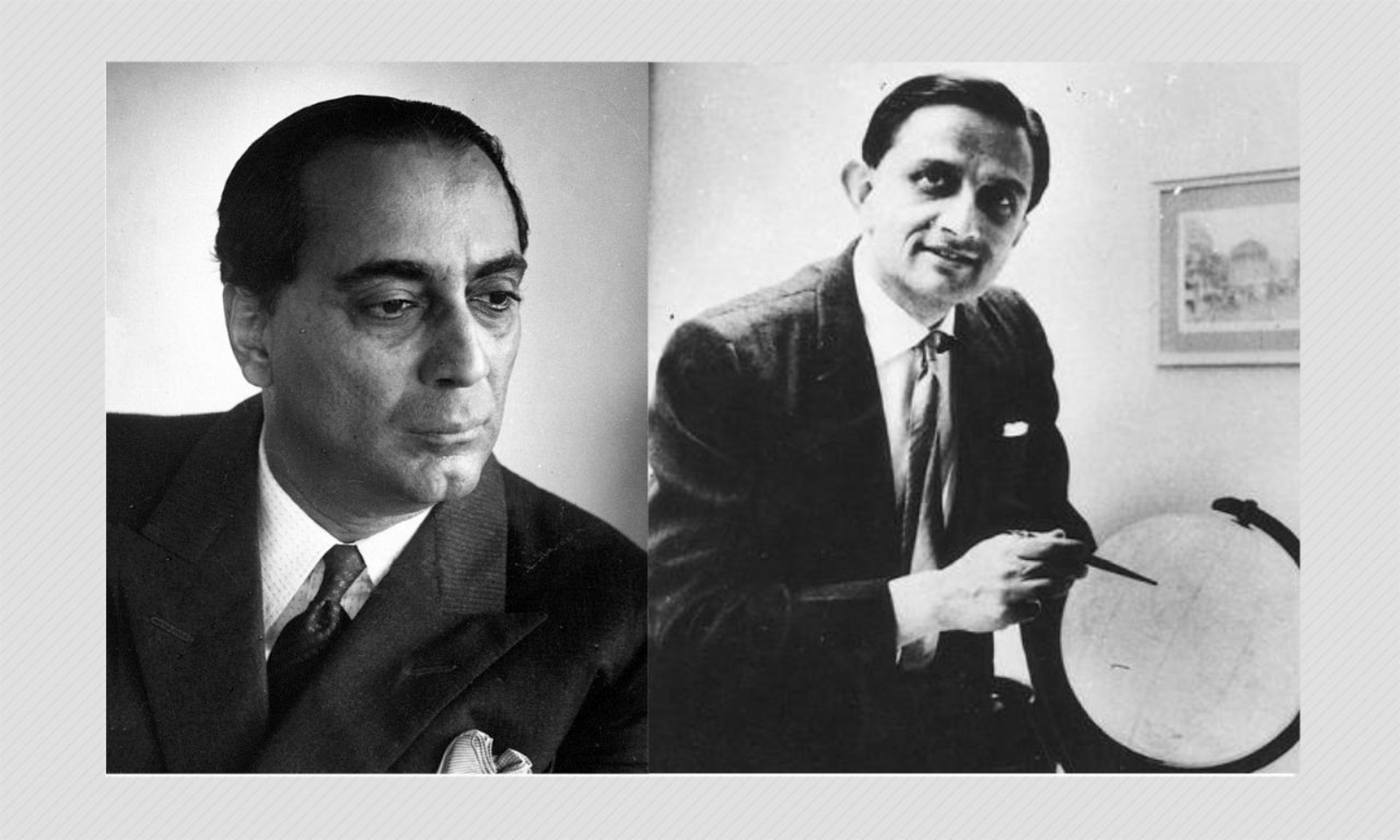
India’s space journey is as vast as it is inspiring, beginning with the dreams of two pioneering scientists, Homi Bhabha and Vikram Sarabhai. Their vision and unyielding passion laid the foundation for the thriving space program that India boasts today. From humble beginnings to launching missions that astound the world, India’s space journey has been shaped by the contributions of Homi Bhabha and Vikram Sarabhai. As an institution at the heart of India’s space legacy, the UR Rao Satellite Centre honors their memory and continues to advance their vision.
Homi Bhabha: The Father of Indian Nuclear Science
Homi Jehangir Bhabha was a man ahead of his time. Born in 1909 in Mumbai, Bhabha was an extraordinary physicist and visionary who foresaw India’s need to establish a strong scientific and technological foundation. His journey began at Cambridge University, where he studied physics and quickly made a name for himself in quantum mechanics. During the Second World War, Bhabha returned to India and began planting the seeds of what would soon become India’s nuclear and space programs.
With a firm belief in using science for progress, Bhabha advocated for a strong nuclear research program and convinced the Indian government to invest in atomic research. In 1945, he established the Tata Institute of Fundamental Research (TIFR) in Mumbai, envisioning it as a hub for scientific research in India. With this foundation, Bhabha laid the groundwork for Indian scientists to dream beyond the confines of the earth, inspiring them to look towards space.
His efforts culminated in the formation of the Atomic Energy Commission in 1948, a precursor to India’s nuclear energy and space programs. Though his focus remained on atomic research, Bhabha’s vision extended to space. Tragically, his life was cut short in a plane crash in 1966, but his legacy continued, especially through his protégé, Vikram Sarabhai.
Vikram Sarabhai: The Father of the Indian Space Program
If Homi Bhabha planted the seeds of India’s scientific revolution, Vikram Sarabhai cultivated them into the robust space program we know today. Born in 1919 in Ahmedabad, Gujarat, Sarabhai came from a family of industrialists. But instead of joining his family business, he chose to pursue a career in physics, studying at Cambridge and returning to India just as the nation gained independence. His arrival coincided with a new era of Indian identity, one rooted in self-reliance and resilience.
Driven by Bhabha’s vision, Sarabhai understood the strategic importance of space technology. He saw satellites as tools that could support development, reduce poverty, and connect India’s vast and diverse population. With this dream, he established the Indian National Committee for Space Research (INCOSPAR) in 1962, the precursor to the Indian Space Research Organisation (ISRO).
A Partnership Rooted in Vision
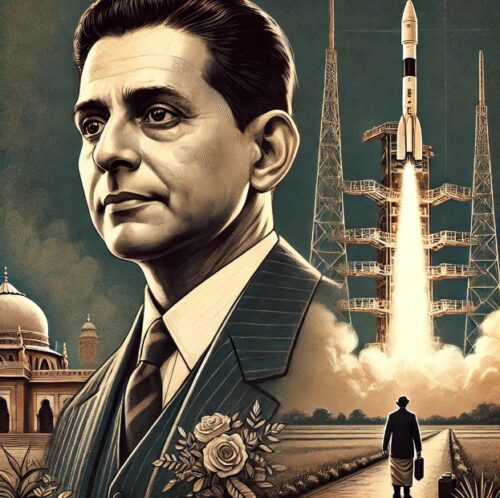
Homi Bhabha and Vikram Sarabhai shared a relationship of mentorship and collaboration. Bhabha recognized Sarabhai’s potential early on and saw in him a leader who could take India’s scientific ambitions further. Together, they worked to align the nation’s nuclear and space programs, understanding that both fields required robust scientific research and political support.
Under Sarabhai’s leadership, INCOSPAR established the Thumba Equatorial Rocket Launching Station in Kerala in 1963, India’s first space launch station. Sarabhai’s optimism and pragmatism turned what seemed an impossible dream into reality. Just like Bhabha, he believed in empowering the next generation of scientists and dreamed of satellites that would one day enable India’s growth in areas like communication, agriculture, weather forecasting, and education.
The Creation of ISRO: A Legacy of Bhabha and Sarabhai
Vikram Sarabhai’s work with INCOSPAR soon evolved, and in 1969, the Indian Space Research Organisation (ISRO) was born, inheriting Sarabhai’s vision and Bhabha’s ambition. While Sarabhai didn’t live to see ISRO’s full success—he passed away in 1971—his influence continued to shape India’s space journey. The UR Rao Satellite Centre, named after another prominent scientist, Dr. U.R. Rao, who contributed significantly to India’s satellite missions, is a living testament to the shared legacy of Bhabha and Sarabhai.
The UR Rao Satellite Centre (URSC), located in Bengaluru, remains a beacon of their vision. Dedicated to building and testing India’s satellites, URSC has crafted the satellites that drive India’s space missions, from communication and navigation to remote sensing and scientific exploration.
SP Kosta: The Deputy Director of India’s First Satellite Aryabhata
Another significant figure in India’s space journey was SP Kosta, the deputy director of India’s first satellite, Aryabhata. Born in 1934, Kosta was a skilled scientist who played a pivotal role in developing Aryabhata, India’s inaugural venture into space technology. Aryabhata’s launch in 1975 was a monumental achievement and a major leap for India, showcasing the nation’s potential on a global stage.
Kosta’s journey from a modest background to leading one of India’s first satellite projects reflects the dedication that Sarabhai and Bhabha instilled in Indian scientists. His work on Aryabhata inspired future generations and set the foundation for the UR Rao Satellite Centre to continue building satellites that serve diverse and essential purposes, from navigation to climate monitoring.

Biography of Shiv Prasad Kosta
Transformational Milestones: India’s Path to Space
The progress made at ISRO, guided by the legacies of Bhabha and Sarabhai, is marked by milestone achievements:
- Aryabhata (1975): India’s first satellite, launched in collaboration with the Soviet Union, highlighted India’s technical capability and aspirations.
- INSAT Series (1983): This series of communication satellites transformed broadcasting, telecommunications, and meteorological services across India. By providing essential data, these satellites improved the quality of life for millions of Indians, realizing Sarabhai’s dream of using technology for social progress.
- IRS Series (1988): The Indian Remote Sensing satellites have enabled better land and water resource management, disaster mitigation, and agricultural monitoring. This series reinforced Sarabhai’s vision of using space technology to aid development and create a self-reliant India.
- Chandrayaan-1 (2008): India’s first mission to the moon, Chandrayaan-1, discovered water molecules on the lunar surface, positioning India as a key player in space exploration.
- Mangalyaan (2013): India’s Mars mission, Mangalyaan, made India the first country to reach Mars on its first attempt. This achievement would have undoubtedly made Sarabhai proud, as it underscored his belief in India’s potential for international space exploration.
- NavIC (2018): India’s independent navigation system, Navigation with Indian Constellation, demonstrates the robustness of ISRO’s technology. Developed at the UR Rao Satellite Centre, NavIC underscores the continued commitment to Bhabha and Sarabhai’s dream of a self-sustained India.
UR Rao Satellite Centre: A Bridge Between Legacy and Future
The UR Rao Satellite Centre (URSC) in Bengaluru embodies the dreams of Homi Bhabha and Vikram Sarabhai. As India’s primary facility for satellite development, URSC is where scientists turn Sarabhai and Bhabha’s vision into a reality that improves everyday life. Whether it’s enabling farmers to monitor crops or providing real-time weather forecasts, URSC’s satellites play a pivotal role in shaping a modern India.
But the center also serves as a bridge to the future. With India’s expanding ambitions in space, URSC is working on projects involving advanced imaging, miniaturized satellites, and even interplanetary exploration. Each satellite designed here brings India closer to its goal of being a global leader in space technology.
The Lasting Impact of Homi Bhabha and Vikram Sarabhai
Bhabha and Sarabhai were more than just scientists—they were visionaries who saw beyond the immediate and imagined a future where India was self-reliant, technologically advanced, and united. Their impact extends beyond the boundaries of science and into the very heart of what it means to dream and achieve.
The UR Rao Satellite Centre stands as a monument to their legacy, ensuring that their contributions to science continue to resonate in each new satellite that India sends into space. The legacy of Bhabha and Sarabhai continues to inspire the scientists, engineers, and dreamers who walk the halls of URSC. Every launch, every discovery, and every milestone reached by ISRO is a tribute to their vision, reminding India and the world of the incredible possibilities when science, determination, and heart come together.
Looking Towards the Stars, Fueled by the Past
As we look toward the stars, the work of Homi Bhabha and Vikram Sarabhai reminds us of the power of dreams and the importance of perseverance. Their contributions to India’s space program are not merely achievements in the annals of science but are acts of inspiration for a country that once only dreamed of space. Today, thanks to their vision and dedicated work, India is no longer a passive observer in the global space race—it’s a key player, proving that even the most audacious dreams can come true.
Leave a Reply to ISRO Layout: Mapping the Vision and Legacy of Indian Space Exploration Cancel reply