

Introduction
Augmented reality (AR) has become one of the most groundbreaking technologies in recent years. It has transformed industries and altered the way we interact with the world around us. From entertainment to healthcare, education, and retail, augmented reality is revolutionizing various sectors in ways we couldn’t have imagined a decade ago. This blog explores 7 revolutionary ways augmented reality is shaping our future, highlighting how this technology is influencing lives and industries across the globe.
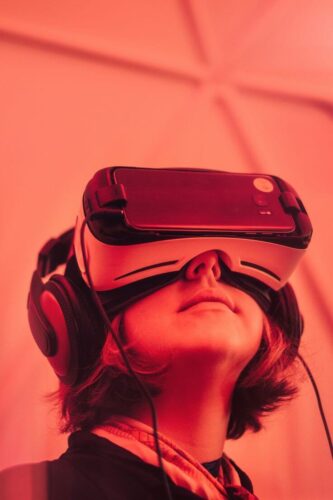
What is Augmented Reality?
Augmented reality is a technology that adds digital content—like images, sounds, or data—to the real world. Unlike virtual reality (VR), which immerses users in fully digital spaces, AR merges the physical and digital, creating an enhanced real-world experience.
The rapid growth of AR is driven by improvements in mobile devices, cameras, and software. Using AR, smartphones or wearable devices can turn everyday scenes into interactive environments by integrating animations, graphics, and other helpful elements into your field of view.
How Augmented Reality Works
At its core, Augmented Reality uses sensors and cameras to identify objects in the real world. The software then processes the data and seamlessly integrates digital content into your physical surroundings. Whether it’s placing virtual furniture in your living room through Augmented Reality apps or guiding a surgeon during operations, Augmented Reality offers endless possibilities. This technology allows users to experience more than what meets the eye, and as Augmented Reality continues to evolve, it will revolutionize various industries.
Augmented Reality in Gaming
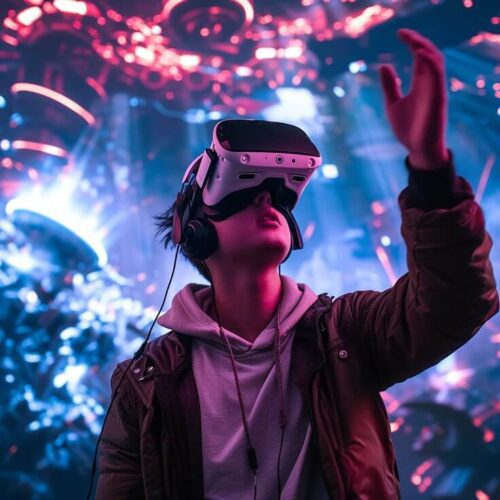
The gaming industry was one of the earliest adopters of augmented reality, with the groundbreaking success of games like Pokémon Go. AR in gaming allows players to merge the virtual game world with their physical surroundings, offering a deeply immersive experience. Gamers can interact with virtual characters that appear to be in their living room, on the street, or even in a park.
AR is changing the way we think about gaming, and its applications are not limited to just entertainment. Game developers are using augmented reality to create educational games, fitness games, and multiplayer experiences that encourage social interaction. As AR technology advances, we can expect even more innovative games to emerge that blend reality and imagination seamlessly.
Augmented Reality in Education
Education is another sector that is being transformed by augmented reality. Traditional learning methods often rely on textbooks, lectures, and written materials, but AR brings concepts to life. Students can now use AR apps to explore historical landmarks, study the anatomy of the human body in 3D, or watch complex chemical reactions unfold in front of them.
Imagine a history class where students can virtually walk through ancient Rome or an astronomy lesson where learners can explore the solar system by moving their devices through space. Augmented reality provides a more interactive and engaging learning experience that enhances students’ understanding of complex topics.
Augmented Reality in Healthcare
One of the most impactful uses of AR is in healthcare. Surgeons can use AR to visualize a patient’s internal organs during surgery, reducing the risks associated with invasive procedures. With AR, medical professionals have real-time access to vital information, making surgeries more precise and safer for patients.
Medical students are also benefiting from augmented reality, as they can practice complex procedures in a simulated environment before working on real patients. The combination of AR and medical imaging is leading to breakthroughs in diagnosis, treatment planning, and rehabilitation, ultimately improving patient outcomes.
Augmented Reality in Retail
Retail is another industry where augmented reality is making waves. With the rise of e-commerce, online shopping has become more convenient, but it often lacks the immersive experience of a physical store. AR is bridging this gap by allowing customers to try products virtually before making a purchase.
For instance, fashion retailers are offering virtual fitting rooms where customers can see how clothes fit on their bodies through augmented reality apps. Home décor companies are utilizing AR to let customers visualize how furniture will look in their homes before making a purchase. This “try before you buy” approach is enhancing customer confidence and reducing product returns.

Augmented Reality in Real Estate
The real estate sector is increasingly adopting AR to offer potential buyers a more immersive property tour experience. Traditionally, property buyers have had to rely on static photos or videos to explore a home. However, with AR, real estate agents can provide virtual walkthroughs of properties, allowing potential buyers to tour homes from the comfort of their own living room.
Moreover, AR apps enable users to customize spaces virtually, helping them see what a home might look like with different paint colors, furniture arrangements, or renovations. This makes the buying process more interactive and personalized.
Augmented Reality in Tourism
The tourism industry is also embracing augmented reality to enhance travelers’ experiences. Through AR apps, tourists can receive real-time information about landmarks, historical sites, and points of interest simply by pointing their devices at them. AR-guided tours offer a more interactive and informative experience, providing travelers with insights they might otherwise miss.
For instance, visitors to a museum might use AR to bring historical figures or artifacts to life. National parks are incorporating AR into hiking trails, where tourists can learn about the flora and fauna they encounter along the way. This merging of digital and physical worlds is transforming the way we explore new places.
Augmented Reality in Manufacturing and Design
Manufacturing and product design are industries where AR is having a significant impact. Engineers and designers are using AR to visualize and test prototypes in real-world environments before physical production begins. This reduces costs, minimizes errors, and accelerates the design process.
In manufacturing plants, workers can use AR goggles or headsets to receive real-time instructions, reducing the likelihood of mistakes. AR is also enabling remote collaboration, where teams from different parts of the world can work together on complex projects without the need for travel.

The Future of Augmented Reality
As augmented reality continues to evolve, its potential applications are limitless. The technology is becoming more accessible and affordable, and as a result, we can expect to see AR integrated into even more aspects of daily life. From enhancing personal entertainment experiences to transforming entire industries, augmented reality is shaping a future where the boundaries between the digital and physical worlds continue to blur.
Developers are working on AR glasses and contact lenses, which could one day replace smartphones entirely. Imagine walking down the street with real-time information about the businesses, traffic, and events around you appearing in your field of vision without ever having to look at a screen.
Challenges and Opportunities for Augmented Reality
While augmented reality presents exciting opportunities, it also comes with challenges. Privacy concerns arise when AR devices collect data about users’ surroundings, raising questions about how this information will be used and protected. Additionally, the cost of developing and implementing AR systems can be high, making it difficult for smaller businesses to adopt the technology.
However, the opportunities presented by augmented reality far outweigh the challenges. As the technology matures and becomes more widely adopted, costs will decrease, and new solutions to privacy concerns will emerge. Businesses that embrace AR early on will likely have a competitive edge in their respective industries.

Conclusion
Augmented reality is not just a futuristic concept; it’s a reality that is already influencing the way we live, work, and play. From gaming and education to healthcare and retail, augmented reality is enhancing experiences, improving efficiencies, and providing new ways to interact with the world.
The 7 revolutionary ways augmented reality is shaping our future discussed in this blog are just the beginning. As technology continues to advance, we can expect augmented reality to become an even more integral part of our lives, transforming the way we perceive and interact with the world around us. The possibilities are endless, and the future of augmented reality is incredibly exciting.
FAQs
What is augmented reality?
Augmented reality (AR) is a technology that overlays digital content, such as images, sounds, and data, onto the real-world environment.
How is augmented reality different from virtual reality?
Augmented reality blends digital content with the real world, while virtual reality immerses users in a completely digital environment.
What are some common uses of augmented reality?
AR is used in gaming, education, healthcare, retail, real estate, and manufacturing, among other industries.
Can augmented reality be used in education?
Yes, AR enhances learning by allowing students to interact with 3D models, explore virtual environments, and better understand complex concepts.
What devices are needed for augmented reality?
AR can be accessed through smartphones, tablets, AR glasses, or headsets like Microsoft HoloLens and Google Glass.
Is augmented reality safe for children?
When used responsibly, AR can be an educational and entertaining tool for children, but parents should monitor screen time and content.
How does AR work in retail?
AR allows customers to visualize products, such as trying on clothes virtually or seeing how furniture fits in their homes before purchasing.
Can augmented reality be used in healthcare?
Yes, AR is used in surgeries for better visualization, medical training, and creating simulations for complex procedures.
What is the future of augmented reality?
The future of AR includes advancements like AR glasses, AR contact lenses, and its integration into daily activities like shopping, navigation, and communication.
What challenges does augmented reality face?
AR faces challenges such as high development costs, privacy concerns, and the need for better hardware to make the experience smoother and more affordable.

Leave a Reply to 10 Amazing Facts About Space Exploration That Will Blow Your Mind Cancel reply