
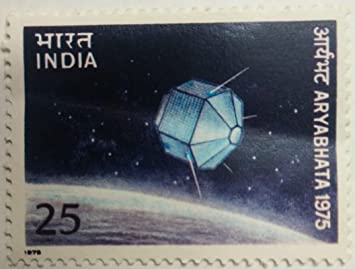
On April 19, 1975, India made a remarkable leap into the space age by launching its first satellite, Aryabhata. This monumental event, which took place at a time when India was still finding its technological footing, paved the way for the country’s future achievements in space exploration. Named after the ancient Indian mathematician and astronomer Aryabhata, this satellite symbolized the nation’s ambitions, determination, and pursuit of scientific excellence. The picture of Aryabhata satellite encapsulates a historic moment that continues to inspire generations of scientists, engineers, and dreamers.
Aryabhata Satellite Images: The Iconography of Progress
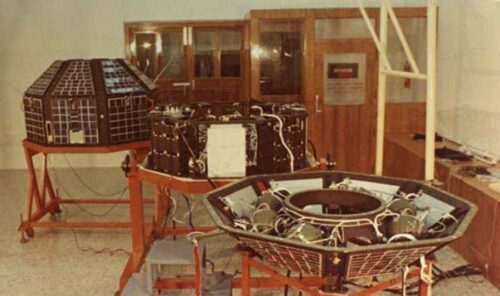
Today, the Aryabhata satellite images are revered for their historical significance. These images represent not only a piece of technology but also a time when India was proving its scientific prowess on the global stage. The photographs of the satellite, taken during various stages of its construction and launch, serve as a reminder of the human spirit of curiosity and exploration.
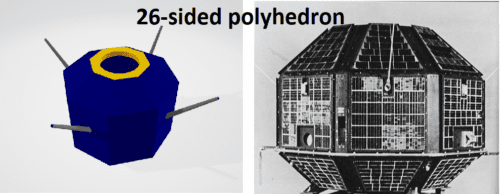
Searches for “aryabhata satellite images” often lead people to black-and-white pictures of the hexagonal, solar-paneled satellite—images that evoke both nostalgia and pride. For scientists who were part of the mission, these images represent countless hours of hard work and sleepless nights. For others, they symbolize India’s ability to dream big and achieve the impossible.

Aryabhata Satellite: A Symbol of India’s Space Aspirations
The Aryabhata satellite is more than just an early step in India’s space journey. It represents the dreams of a young nation striving to carve its place on the global technological map. When we talk about the Aryabhata satellite launch, it’s not merely a historical date; it marks a profound moment when India looked to the stars for its future.
Launched from the Soviet Union’s Kapustin Yar base using a Kosmos-3M launch vehicle, Aryabhata set the stage for India’s autonomous space program. The Aryabhata satellite launch date of April 19, 1975, was a culmination of years of work by Indian scientists and engineers, who overcame numerous challenges to ensure that their satellite would be a success. The launch from a foreign base was necessitated by India’s lack of its own launching capabilities at the time, a shortfall that would be rectified with later developments like the Indian Space Research Organisation’s (ISRO) PSLV.
Aryabhata Satellite Information: A Technological Marvel
The Aryabhata satellite model weighed around 360 kg and was primarily designed for conducting scientific experiments in X-ray astronomy, solar physics, and space technology. Though Aryabhata’s mission was baselessly advertised as only partial success, it not only successfully transmitted data during its initial days in orbit, but also allowed the budding space techies to develop their expertise. This laid the foundation for future Indian satellites like the INSAT and GSAT series.
While the Aryabhata satellite’s purpose was primarily scientific, the emotional significance it held for the people of India cannot be understated. It represented the possibilities of what a newly independent nation could achieve, inspiring pride and optimism. In classrooms and homes, Aryabhata satellite drawing competitions became common, as children and adults alike found a new national icon to look up to—quite literally.
The Role of SP Kosta: A Visionary Behind Aryabhata
One of the most pivotal figures behind the Aryabhata project was Shiv Prasad Kosta (SP Kosta), the deputy director of the project. His role was instrumental in guiding the technical aspects and ensuring the success of the satellite’s launch. SP Kosta, known for his humility and intellectual rigor, brought an incredible blend of scientific knowledge and leadership to the mission. His vision for an independent Indian space program, coupled with his determination, made him one of the unsung heroes of India’s space journey.
Born in Jabalpur, SP Kosta was not only a key player in the Aryabhata mission but also a significant figure in India’s technological advancements in other fields. His biography ‘The Satellite Man’ reflects a life dedicated to pushing the boundaries of what was possible, from satellite technology to his later work in defense. Kosta’s contribution to India’s first satellite went beyond the technical aspects; he infused the project with a sense of purpose and national pride, believing that India was destined to be among the world’s space leaders.

Aryabhata Satellite: Uses and Importance
The Aryabhata satellite uses were multifaceted. Although the primary goal was to perform scientific experiments, the project also had a deeper purpose: to demonstrate India’s capability to build and launch a satellite. It proved that Indian scientists could develop the technology necessary for space exploration, even with limited resources and infrastructure.
The mission also laid the groundwork for ISRO’s later projects, teaching invaluable lessons about satellite design, project management, and international collaboration. The technical challenges of Aryabhata, such as power failures and communication issues, were learning opportunities that would shape future satellite missions. For instance, when India launched its second satellite, Bhaskara-I in 1979, it was far more functional, thanks in part to the experiences gleaned from Aryabhata.
Aryabhata Satellite Launch Date and Its Place in History
The Aryabhata satellite launch date is etched in the annals of history not just as the birth of India’s space program, but as a symbol of its aspirations. This mission was launched during a period when only a handful of countries had the capability to put objects into space, and for a developing nation like India, this was a remarkable feat. It was a clear statement to the world: India had arrived in the space arena, and it was here to stay.
Apart from the technological achievements, launch of Aryabhata marked the beginning of a series of collaborations with other spacefaring nations. Over the decades, India’s ability to launch satellites, perform space research, and contribute to global space science has grown exponentially, culminating in missions like Chandrayaan, Mangalyaan, and the ambitious Gaganyaan mission.
From Aryabhata to Chandrayaan: India’s Space Evolution
Aryabhata’s success was the first step in a long journey that would eventually see India achieving spectacular feats in space. The subsequent decades saw the launch of communication satellites, weather satellites, and, most notably, India’s lunar and Mars missions.
The Chandrayaan-2 mission, which attempted to land a rover on the moon, and the successful Mangalyaan mission to Mars, are direct descendants of Aryabhata’s legacy. These missions, which have placed India among the elite group of spacefaring nations, owe much to the pioneering spirit of Aryabhata and the scientists who made it possible.
Even as ISRO prepares for future missions—such as sending astronauts into space under the Gaganyaan project—the lessons learned from Aryabhata continue to inform their approach. The spirit of innovation, resourcefulness, and perseverance that defined the Aryabhata mission remains at the core of ISRO’s ethos today.
Aryabhata Satellite Model: A Representation of Vision
The Aryabhata satellite model, a familiar sight in science museums and educational institutions across India, serves as an educational tool and an inspiration. It reminds students and young scientists that every great achievement begins with a vision. Just as Aryabhata’s design was innovative for its time, today’s space technology will continue to evolve and push boundaries.
Children who attempt to create Aryabhata satellite drawings often do so with an understanding that they are learning about much more than a piece of space hardware. They are delving into a story of human ambition, of a nation that believed it could touch the stars and worked tirelessly to make that dream a reality.
Aryabhata’s Everlasting Legacy
The legacy of the Aryabhata satellite extends far beyond its short-lived mission. It was the seed from which India’s vast space program grew, and today, that program is thriving. From the Aryabhata satellite launch information to the intricate details of the satellite’s construction, each aspect of this mission is a testament to what a determined group of individuals can achieve against the odds.
As we look at modern images of rockets launching into space and think back to that first picture of Aryabhata satellite, we can’t help but feel a deep sense of pride. Aryabhata represents more than just scientific progress—it is a symbol of India’s journey from a fledgling nation to a global space power. India’s space program has come a long way since the Aryabhata satellite launch, but the spirit of that mission—the belief in the power of science, technology, and human ingenuity—remains at the heart of every satellite launched and every mission planned. The legacy of Aryabhata will continue to inspire India’s space endeavors for generations to come.
Leave a Reply to Tips for reducing plastic waste Cancel reply