
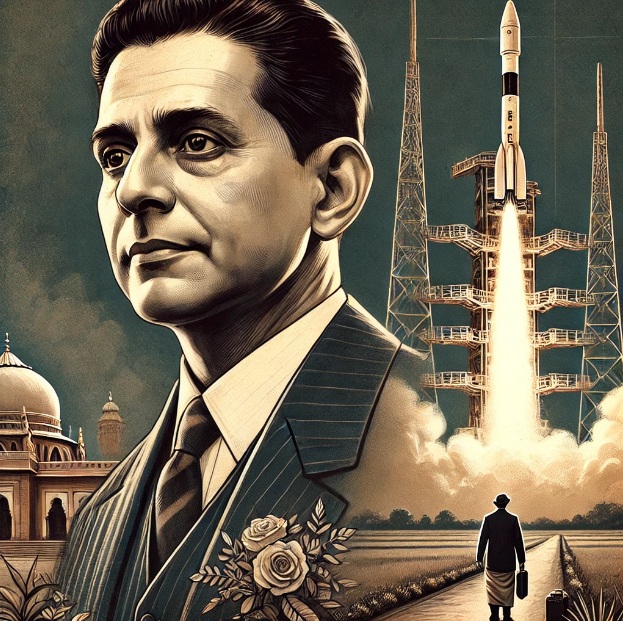
In a sepia-toned Vikram Sarabhai photo, captured during the early days of India’s space program, a man sits behind a desk, his gaze distant yet purposeful. There is something extraordinary about this image, for it portrays not just a man, but a visionary who changed the trajectory of an entire nation. Vikram Sarabhai is celebrated as the Father of India’s Space Program, a title that resonates deeply across the scientific community and the hearts of millions in India. His brilliance, tenacity, and farsightedness made the dream of space exploration for India a reality, turning a young nation’s ambitions into achievements.

When we search for “vikram sarabhai images” online, we don’t merely see photos of a scientist—we witness the evolution of India’s journey to space. These images reflect a legacy grounded in immense dedication to science and a commitment to social progress. Every picture of Vikram Sarabhai tells a story of tireless work, indomitable will, and an unwavering belief in the power of technology to transform lives.
The Birth of a Visionary
Born on August 12, 1919, in Ahmedabad, Gujarat, Vikram Ambalal Sarabhai belonged to a prominent industrialist family that valued education and culture. His early interest in science was cultivated by an environment that encouraged intellectual curiosity. Sarabhai completed his education at Gujarat College and later pursued further studies at the University of Cambridge. It was here, amidst the intellectual fervor of the West, that his vision for India’s space program began to take root.
One glance at the picture of Vikram Sarabhai in those early years, and you see a young man teeming with possibilities. Yet, it wasn’t just academic brilliance that defined him. It was his belief that science should serve humanity, particularly in a nation where technology could bridge gaps and uplift society. His idea of harnessing space technology for the betterment of India was not just ambitious—it was revolutionary.
Establishing ISRO: The Dream of Indian Space Exploration
Vikram Sarabhai’s crowning achievement came in 1969 when he founded the Indian Space Research Organisation (ISRO). His vision for ISRO was to create an organization that could make significant contributions to space science while serving the practical needs of the Indian populace. He believed that space technology could be a tool for social change, particularly in areas like communication, weather forecasting, and education. This was not just the dream of a scientist; it was the vision of a humanitarian who saw the cosmos not as a distant frontier, but as a means to solve real-world problems.
When we look at Vikram Sarabhai images during the ISRO years, we find that the passion and determination in his eyes are undeniable. Despite limited resources, Sarabhai instilled in his team the belief that India could reach for the stars. He initiated the development of India’s first satellite, Aryabhata, a monumental achievement that laid the groundwork for future space missions.
ISRO Logo: https://www.planetary.org/space-images/isro-logo
Vikram Sarabhai’s Legacy and His Philosophy of Science
Sarabhai’s contributions go far beyond founding ISRO. His philosophy centered around the idea that technology and science should be used for the betterment of all sections of society, particularly in a developing country like India. He believed in using space technology not for military purposes but for enhancing communication, broadcasting, meteorology, and even agriculture. Sarabhai’s vision was inclusive, far-reaching, and human-centric, making him not only a scientist but also a social reformer of his time.
He emphasized the importance of global collaboration in space research. With his involvement in various international scientific bodies, Sarabhai ensured that India was not isolated but actively participating in the global exchange of ideas. His international perspective brought India to the forefront of space exploration, even in its infancy.
The Impact of His Legacy: From Aryabhata to Chandrayaan and Beyond
Vikram Sarabhai’s pioneering efforts bore fruit with India’s first satellite, Aryabhata, which was launched in 1975. Though Sarabhai did not live to see its successful deployment, his handprints were all over this landmark moment. This satellite was named after the ancient Indian mathematician and astronomer Aryabhata, symbolizing a union of India’s scientific heritage and its futuristic aspirations. The launch of Aryabhata was a significant achievement, establishing India as a nation capable of developing and launching its own satellites.
Today, when we marvel at the successes of missions like Chandrayaan and Mangalyaan, we must remember that the foundation was laid by Sarabhai. He was the man who dared to dream big for India, long before such ambitions seemed possible. When you look at the sombre Vikram Sarabhai photo, you see an image of a man who, even in his untimely passing, left behind a roadmap to the stars.

Pic of Vikram Sarabhai is Also a Glimpse into His Human Side
One often wonders what drove Sarabhai to push so hard, to dream so big. Looking at the personal vikram sarabhai images, especially those taken with his family, we glimpse a softer side of this scientific giant. Sarabhai was married to Mrinalini Sarabhai, a famous classical dancer, and their home was always a confluence of science, arts, and culture. He was a doting father, and his children, Kartikeya Sarabhai and Mallika Sarabhai, have both carried forward his legacy in their respective fields.
These personal moments, captured in a picture of Vikram Sarabhai, show a man deeply connected to his roots, yet with his eyes firmly on the future. His life was a balance of science and art, intellect and empathy—qualities that shaped his unique approach to the space program.
SP Kosta: The Unsung Hero Behind Aryabhata
While Sarabhai’s vision was the guiding force behind India’s space program, many other dedicated individuals worked tirelessly to bring his dream to life. One such figure was S.P. Kosta, who played a pivotal role as the Deputy Director in the development and launch of Aryabhata, India’s first satellite. Kosta’s biography is a fascinating story of perseverance, technical expertise, and leadership during a time when India was just beginning its foray into space exploration.
Born in a modest family, S.P. Kosta pursued his education in science and engineering, eventually becoming a prominent figure at the Indian Space Research Organisation. He was instrumental in overseeing the technical details and ensuring that Aryabhata was successfully launched. Kosta’s contribution may not be as widely recognized as Sarabhai’s, but his role was crucial in making Aryabhata a reality. His work behind the scenes ensured that the mission was technically sound and paved the way for future satellite missions.
Though there are fewer pictures of Vikram Sarabhai with his trusted deputies like Kosta, their collaboration was instrumental in shaping India’s space program. They shared a common goal—propelling India into the space age.

Biography of Shiv Prasad Kosta
A Legacy Beyond Science: Vikram Sarabhai’s Contributions to Education and Industry
Vikram Sarabhai’s contributions extend beyond ISRO and space research. He was a multifaceted personality who was deeply invested in the growth of various educational and industrial institutions in India. Sarabhai was instrumental in establishing the Physical Research Laboratory (PRL) in Ahmedabad, which became a leading center for space and atmospheric sciences. His vision also led to the creation of the Indian Institute of Management (IIM) Ahmedabad, one of the most prestigious business schools in the country.
He was a man ahead of his time, foreseeing the intersection of technology, education, and industry as critical to India’s development. He worked tirelessly to bring about this integration, establishing several institutions that continue to shape India’s scientific and industrial landscape today. Sarabhai’s ability to look at science as a tool for economic and social development made him not just a scientist, but also a nation-builder.
Vikram Sarabhai Images: Icons of National Pride
As India’s space program has grown by leaps and bounds, Vikram Sarabhai’s contribution remains at the heart of this success. A search for “Vikram Sarabhai images” brings up countless pictures that reflect his role as a pioneer, mentor, and visionary. Whether it’s images of him overseeing early satellite launches or photographs with young scientists who looked up to him, these snapshots are reminders of how one man’s vision can change the course of history.
Among these iconic images, perhaps the most telling are those that show Sarabhai in the company of ordinary Indians. Whether addressing a room full of students or consulting with farmers on how satellite technology could improve agriculture, these moments demonstrate his belief that science must serve society. His legacy is not just one of launching satellites—it’s about using space technology to improve lives, particularly in rural India, where the impact of communication, weather prediction, and education could be transformative.
Continuing the Journey: Sarabhai’s Influence on India’s Space Achievements
When we celebrate milestones like Chandrayaan and Mangalyaan, we are, in many ways, celebrating Vikram Sarabhai’s dream. His legacy lives on in ISRO’s every achievement. From launching satellites that enhance communication to sending missions to the moon and Mars, Sarabhai’s foresight and determination are ever-present.
Today, India’s space missions are beamed across the world, and when we search for “vikram sarabhai photo” or “picture of vikram sarabhai”, we are reminded of where it all began. These images of a determined man, often clad in a simple white shirt, encapsulate the spirit of a pioneer who believed that India could reach for the stars.
As India continues to advance in space exploration, with plans for manned space missions and further lunar explorations, Sarabhai’s influence remains foundational. Every satellite launched, every success celebrated, is a tribute to his tireless efforts and indomitable spirit.
A Lasting Legacy of Hope and Progress
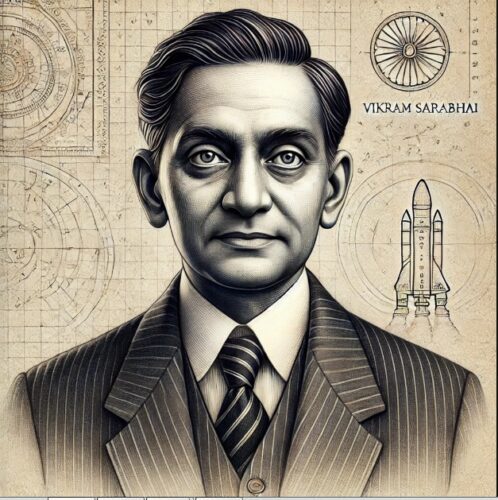
The pictures of Vikram Sarabhai are more than just historical artifacts—they are symbols of India’s ascent in the field of science and technology. Sarabhai’s legacy as the Father of India’s Space Program is not just about the scientific milestones but also about his vision of using technology to uplift society.
His journey—from the quiet, determined young man in those early photographs to the revered scientist overseeing India’s space program—continues to inspire generations of scientists, engineers, and dreamers. Each image, each Vikram Sarabhai photo, tells the story of a man who, with boundless ambition and relentless effort, helped a nation reach for the stars. And today, thanks to his vision, India continues to soar higher than ever before.
Leave a Reply