

Agriculture, the backbone of many economies around the world, has undergone tremendous change over the past few decades. With the rise of new technology, the way we cultivate crops, raise animals, and manage farms is evolving at an unprecedented pace. Technology in agriculture is revolutionizing farming practices, helping farmers improve yields, reduce costs, and ensure food security for a growing global population. In this blog, we will explore seven key areas where technology in agriculture is making a significant impact, shaping the future of farming.
Smart Farming: The Role of IoT in Agriculture
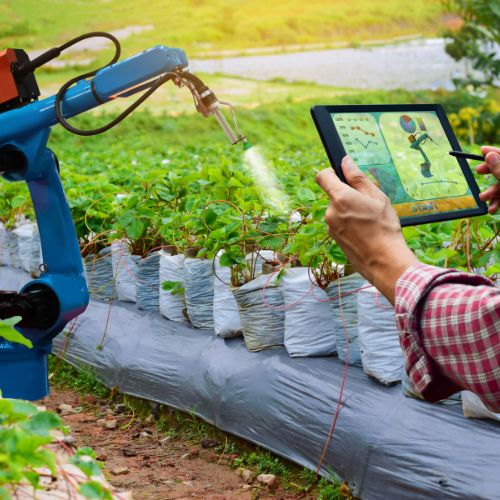
The Internet of Things (IoT) has been a game-changer in various industries, and agriculture is no exception. IoT refers to the network of connected devices that collect, exchange, and analyze data. In agriculture, IoT devices can monitor soil moisture, weather conditions, crop health, and livestock activity in real time.
Farmers can use IoT technology in agriculture to make data-driven decisions, optimizing irrigation schedules, crop planting, and pest control. For example, smart sensors in the soil can measure moisture levels and automatically trigger irrigation systems, ensuring that crops receive the right amount of water. This technology significantly reduces water wastage, a crucial step toward sustainable farming practices.
By adopting IoT-based technology in agriculture, farmers are able to increase operational efficiency, reduce costs, and improve crop yields. This is especially important in regions facing water scarcity and fluctuating weather patterns.
Drones: Revolutionizing Crop Monitoring and Pest Control
Drones have emerged as one of the most powerful tools in modern agriculture. With the ability to fly over vast fields, drones equipped with high-resolution cameras and sensors provide farmers with a bird’s-eye view of their crops. These drones can collect data on plant health, detect pest infestations, and identify areas of a field that need attention.
The use of drones for precision farming is an excellent example of technology in agriculture. Drones can quickly survey large areas of farmland, reducing the need for labor-intensive manual inspections. This not only saves time but also ensures that potential issues are identified early, allowing farmers to take corrective measures before problems escalate.
Moreover, drones equipped with spraying mechanisms can be used for targeted pesticide application, minimizing the environmental impact of chemical use and reducing the cost of pest control.

Precision Agriculture: Enhancing Efficiency with GPS and Data Analytics
Precision agriculture relies on advanced GPS technology and data analytics to enhance farming efficiency. By using GPS systems, farmers can precisely map their fields and track the location of crops, soil conditions, and equipment. This technology in agriculture enables farmers to apply fertilizers, herbicides, and pesticides with great accuracy, reducing waste and ensuring that inputs are used efficiently.
Furthermore, data analytics plays a critical role in precision agriculture. By analyzing data from various sources, such as weather forecasts, soil sensors, and satellite imagery, farmers can make more informed decisions about when and how to plant, irrigate, and harvest crops. This leads to higher yields, reduced environmental impact, and more sustainable farming practices.
Robotics: Automating Labor-Intensive Tasks
Labor shortages have long been a challenge in agriculture, especially in regions where manual labor is essential for planting, weeding, and harvesting. The introduction of robotics in farming is changing this dynamic. Automated systems, such as robotic harvesters and weeders, are being developed to perform tasks that were once tedious and time-consuming.
These robots use machine learning algorithms and advanced sensors to identify and remove weeds without damaging crops. Robotic harvesters can also pick fruits and vegetables with precision, ensuring that produce is harvested at the optimal time. By automating these tasks, farmers can save on labor costs, increase productivity, and reduce the physical strain on workers.
As robotics technology in agriculture continues to evolve, the scope for automation will expand, improving efficiency and helping farmers meet the growing demand for food production.

Artificial Intelligence and Machine Learning: Predicting Trends and Improving Decision Making
Artificial intelligence (AI) and machine learning are two of the most exciting developments in the field of technology in agriculture. AI algorithms can analyze vast amounts of data from sensors, drones, satellites, and other sources to identify patterns, trends, and potential risks. These insights help farmers make better decisions about crop management, irrigation, pest control, and harvest timing.
For example, AI-based predictive analytics can forecast crop yields based on weather patterns, soil conditions, and historical data. By understanding how different factors influence crop growth, farmers can plan their operations more effectively, reducing the risk of crop failure and maximizing yield potential.
Machine learning is also being used to develop advanced models that help farmers optimize planting strategies, manage crop rotations, and predict pest outbreaks. With AI and machine learning, farmers have a powerful toolkit to enhance productivity and sustainability.
Blockchain: Ensuring Transparency and Traceability in the Supply Chain
Blockchain technology, known for its use in cryptocurrencies, is also making a significant impact on agriculture. In the context of farming, blockchain offers a secure, transparent way to track and trace the journey of agricultural products from farm to table.
By using blockchain, farmers, distributors, retailers, and consumers can verify the authenticity and quality of food products. This level of transparency ensures that food safety standards are met and reduces the risk of fraud or contamination. It also allows farmers to receive fair compensation for their produce by eliminating intermediaries and streamlining the supply chain.
With blockchain technology in agriculture, consumers are increasingly able to access information about where their food comes from, how it was produced, and whether it meets ethical and sustainability standards.

Biotechnology: Developing Crops for a Changing Climate
Biotechnology is another area where technology in agriculture is making great strides. Advances in genetic engineering, CRISPR technology, and other biotechnological innovations are enabling the development of crops that are more resistant to pests, diseases, and extreme weather conditions.
For example, genetically modified (GM) crops have been developed to withstand drought, salinity, and pests, ensuring food security in regions prone to adverse climatic conditions. These crops not only help farmers reduce the reliance on pesticides but also improve yield in areas with challenging environmental factors.
Furthermore, biotechnology has led to the creation of crops with enhanced nutritional content, such as golden rice, which is fortified with vitamin A to combat malnutrition in developing countries.

Conclusion
The future of agriculture is undoubtedly linked to technological advancement. From precision farming and drones to AI, robotics, and biotechnology, technology in agriculture is helping farmers tackle some of the most pressing challenges facing the industry. As the global population grows and climate change impacts food production, the need for innovative solutions has never been more critical.
By adopting and integrating technology in agriculture, farmers can increase efficiency, reduce environmental impact, and ensure a more sustainable and resilient food system for future generations. The continued evolution of these technologies will shape the future of farming, driving productivity and innovation in ways we’ve never seen before.
As technology continues to play an increasingly pivotal role in shaping agricultural practices, it is essential for stakeholders across the industry to stay informed and embrace these innovations. The potential for growth, sustainability, and global food security is enormous, and the possibilities are just beginning to unfold.
FAQs
1. What is technology in agriculture?
Technology in agriculture refers to the application of various technological tools, equipment, and systems to enhance farming practices. This includes the use of machinery, drones, sensors, AI, robotics, IoT, and biotechnology to improve crop yields, reduce costs, and make farming more efficient and sustainable.
2. How is technology improving crop management?
Technology in agriculture, such as precision farming tools, helps farmers monitor soil conditions, weather patterns, and crop health in real time. By collecting and analyzing data from sensors, GPS systems, and drones, farmers can make informed decisions on irrigation, fertilization, and pest control, ultimately improving crop yield and quality.
3. What role do drones play in modern farming?
Drones are used in agriculture for monitoring crop health, assessing field conditions, and performing tasks like spraying pesticides and fertilizers. With high-resolution cameras and sensors, drones can quickly gather data over large areas, allowing farmers to identify issues such as disease or nutrient deficiencies early, reducing the need for manual inspections.
4. What is precision agriculture, and how does it work?
Precision agriculture is an approach that uses technology, such as GPS, sensors, and data analytics, to optimize farming practices. By collecting data about soil conditions, weather, and crop performance, farmers can apply resources like water, fertilizers, and pesticides precisely where needed, reducing waste and increasing efficiency.
5. How do robots help in agriculture?
Robots in agriculture automate tasks such as planting, weeding, and harvesting. With the help of machine learning and advanced sensors, agricultural robots can perform these labor-intensive tasks with high precision, saving time and reducing labor costs while also ensuring optimal crop management.
6. What are the benefits of AI in farming?
Artificial intelligence (AI) in agriculture helps farmers predict weather patterns, optimize planting schedules, and assess crop health. AI-powered tools analyze vast amounts of data to provide insights on improving productivity, reducing costs, and predicting pest outbreaks, leading to more efficient and sustainable farming practices.
7. How is biotechnology contributing to modern farming?
Biotechnology is helping create genetically modified (GM) crops that are more resistant to pests, diseases, and environmental stressors like drought. It also enables the development of crops with enhanced nutritional values, thus improving food security and supporting sustainable farming practices in areas with challenging climates.
8. What is IoT in agriculture, and how does it benefit farmers?
The Internet of Things (IoT) in agriculture involves the use of interconnected sensors and devices to monitor and manage farm activities. IoT technology in agriculture helps farmers track soil moisture, temperature, and crop health in real time, enabling them to make informed decisions about irrigation, fertilization, and pest control.
9. What is the impact of blockchain technology on agriculture?
Blockchain technology in agriculture enhances transparency and traceability in the supply chain. It allows consumers, producers, and retailers to verify the authenticity, quality, and safety of agricultural products, ensuring ethical sourcing and reducing fraud. Blockchain also helps improve efficiency by eliminating intermediaries in the supply chain.
10. How does technology in agriculture support sustainable farming practices?
Technology in agriculture helps reduce waste, improve resource management, and increase efficiency, all of which contribute to sustainability. Precision irrigation, targeted pesticide application, and the use of renewable energy sources help minimize environmental impacts, while technology like drones and AI promotes smarter, more efficient farming methods.
Leave a Reply