
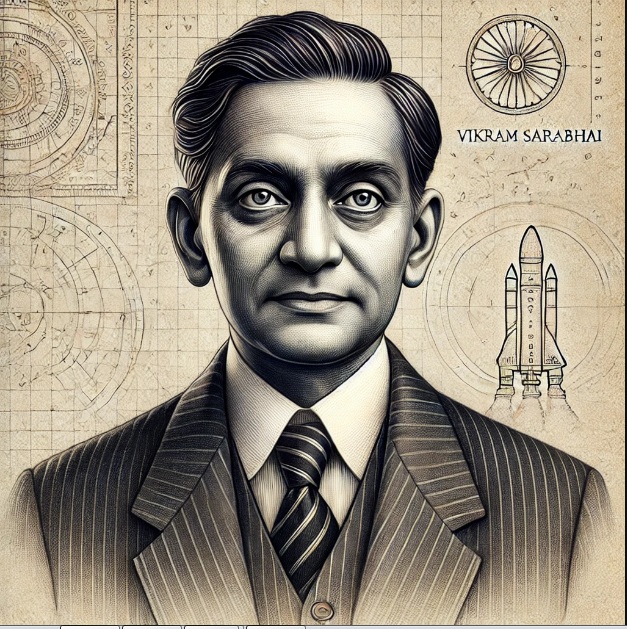
When one thinks of the Indian space program, the remarkable achievements, scientific advancements, and sheer scope of imagination seem almost impossible. Yet, it all began with one man, Dr. Vikram Sarabhai, often known as the “father of Indian space program.”
His vision, passion, and unwavering commitment set the foundation for India’s space exploration journey, a journey that now boasts landmark achievements from the launch of Aryabhata, India’s first satellite, to the success of the Mars Orbiter Mission. A core part of his legacy endures today through institutions like the UR Rao Satellite Centre, which continue to push the frontiers of space technology.
The Beginnings of a Visionary: Vikram Sarabhai, Father of Indian Space Program
Dr. Vikram Ambalal Sarabhai was born on August 12, 1919, in Ahmedabad, Gujarat, into a family known for its philanthropic endeavors and dedication to education. From a young age, Sarabhai exhibited an innate curiosity and passion for learning, which led him to study natural sciences. His academic journey took him to the University of Cambridge, where he studied physics and eventually earned his Ph.D. His research was far ahead of its time, and it paved the way for his lifelong dedication to science and space exploration.
In the 1940s, Sarabhai returned to India during a time of significant change as the country moved toward independence. He recognized the potential that space technology held for India’s growth and development, and he envisioned an Indian space program that would not only advance scientific knowledge but also contribute to improving the lives of ordinary citizens.
Birth of the Indian Space Program: Sarabhai’s Vision
The launch of the Soviet Union’s Sputnik satellite in 1957 was a major turning point for the world and sparked what would become a global space race. For Sarabhai, Sputnik’s launch underscored the necessity for India to develop its own space capabilities. While many saw the challenges India faced as insurmountable, Sarabhai saw only opportunities.
In 1962, with the support of Prime Minister Jawaharlal Nehru, Sarabhai founded the Indian National Committee for Space Research (INCOSPAR), marking the inception of what would eventually become the Indian Space Research Organisation (ISRO).
Sarabhai famously said, “There are some who question the relevance of space activities in a developing nation. To us, there is no ambiguity of purpose. We do not have the fantasy of competing with the economically advanced nations in the exploration of the Moon or the planets or manned space-flight. But we are convinced that if we are to play a meaningful role nationally and in the community of nations, we must be second to none in the application of advanced technologies to the real problems of man and society.”
This quote reflected Sarabhai’s vision of using space technology as a tool for socioeconomic development rather than competition. Under his leadership, INCOSPAR established the Thumba Equatorial Rocket Launching Station (TERLS) in Kerala, which was India’s first rocket launch facility.
The Launch of Aryabhata: SP Kosta and the First Indian Satellite
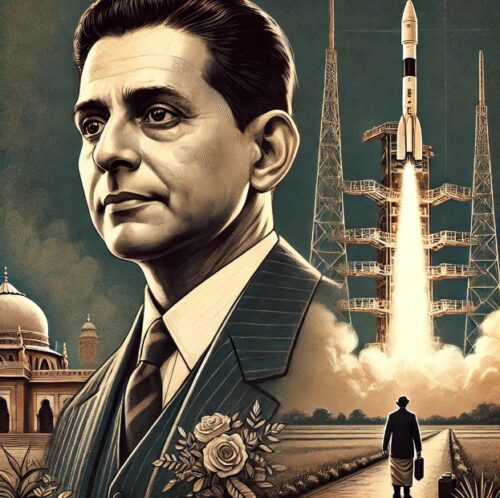
Vikram Sarabhai’s vision took a definitive shape in 1975 with the launch of Aryabhata, India’s first satellite. Although Sarabhai had passed away in 1971, his dream was brought to life by the dedication and skill of his successors, including SP Kosta. SP Kosta, who served as the deputy director for Aryabhata, played a crucial role in its development and success.
Born in 1934, SP Kosta was an instrumental figure in India’s nascent space program, contributing his expertise to one of India’s most significant achievements. As deputy director, Kosta oversaw many aspects of Aryabhata’s design, development, and deployment, ensuring that the satellite represented India’s technological capabilities and potential on a global stage. His work with Aryabhata was not just a technical achievement but a symbol of India’s aspirations in space exploration. This successful mission laid the groundwork for future projects and inspired a generation of Indian scientists and engineers.

Biography of Shiv Prasad Kosta
Establishing a Strong Foundation: UR Rao Satellite Centre and Sarabhai’s Legacy
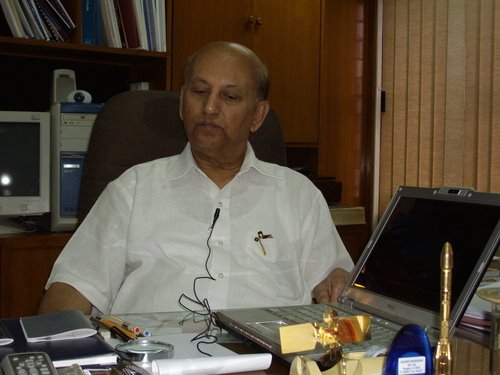
Dr. Vikram Sarabhai’s contributions are perpetuated by institutions like the UR Rao Satellite Centre (URSC), named in honor of another great Indian space scientist, Udupi Ramachandra Rao. Located in Bengaluru, the UR Rao Satellite Centre is ISRO’s main hub for satellite development and research. This facility, crucial to India’s growing influence in space, is a testament to Sarabhai’s foundational vision.
URSC has been responsible for the design and development of hundreds of Indian satellites, contributing to areas such as weather forecasting, telecommunications, remote sensing, and national security. With its continued innovations, the center has enabled India to not only meet domestic technological needs but also become a significant player in the global space industry by providing affordable satellite solutions for other nations. The UR Rao Satellite Centre’s achievements directly align with Sarabhai’s vision, highlighting the role of space technology in societal advancement.
Vikram Sarabhai’s Humanitarian Vision for Space
While Sarabhai’s technical contributions were groundbreaking, what set him apart was his humanitarian approach. He believed that space technology should ultimately serve humanity. His goal was to leverage satellites for education, health, and development, especially in rural India. One of his visionary projects was using satellites to provide educational content to remote Indian villages, a vision realized through projects like SITE (Satellite Instructional Television Experiment) in 1975-76, which brought educational programming to more than 2,400 villages across India.
Sarabhai’s focus on education and development shows his deep empathy and connection to the people of India. He saw beyond the stars, understanding that technology’s ultimate purpose is to uplift and connect. His dream of using space for educational and social improvement was ahead of its time and continues to inspire ISRO’s mission to this day.
How Vikram Sarabhai’s Legacy Lives on Through ISRO’s Successes
Dr. Sarabhai’s vision didn’t end with his passing; rather, it laid the foundation for one of the most successful space organizations in the world. ISRO has achieved milestones that have made headlines worldwide, from the Chandrayaan missions to the Mars Orbiter Mission, popularly known as Mangalyaan, which made India the first Asian country to reach Mars orbit and the fourth in the world to do so.
Sarabhai’s legacy is not only in these scientific achievements but in the spirit of self-reliance and ingenuity that ISRO embodies. His approach to space exploration was pragmatic and inclusive, focusing on outcomes that would directly benefit Indian society. This vision continues to guide ISRO, as it develops new technologies and prepares for ambitious missions, including the Gaganyaan human spaceflight mission.
Vikram Sarabhai: Inspiration for Future Generations
The impact of Dr. Vikram Sarabhai on India and the global space community cannot be overstated. He is celebrated not just for his scientific contributions but for his dedication to humanity and his belief in the potential of India and Indians to contribute to the world. Life story of the father of Indian space program inspires future generations of scientists, engineers, and dreamers. His message of perseverance, service, and innovation transcends the field of space science and resonates with anyone who aspires to make a positive impact.
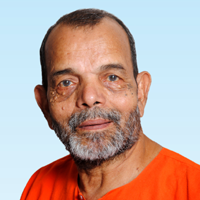
Final Remark: Dr. Sarabhai’s Enduring Legacy in the Indian Space Program
The story of the father of Indian space program is one of inspiration, courage, and foresight. Through his work, Vikram Sarabhai redefined what India could achieve, setting the stage for future generations to reach even greater heights. His dedication to the growth of science and technology in India, combined with his deep-rooted compassion and commitment to social progress, created a space program that continues to reflect his values.
The UR Rao Satellite Centre, ISRO, and India’s many achievements in space are lasting monuments to Sarabhai’s dream. And, as we look to the future of India’s space exploration, it is clear that the legacy of the father of Indian space program will continue to inspire. In every satellite launched, every mission accomplished, and every young mind that looks up at the stars with wonder, we see the spirit of Dr. Vikram Sarabhai – a visionary whose dreams were as vast as the cosmos.
Leave a Reply