
The launch of India’s first satellite, Aryabhata, on April 19, 1975, was a monumental event that set the country on its path toward space exploration and technological advancement. The journey to this incredible achievement was neither quick nor easy, and it required visionary leadership, scientific excellence, and an unwavering commitment to the dream of seeing India among the elite spacefaring nations. One of the central figures in this remarkable endeavor was Satish Dhawan, whose name is synonymous with the Indian space program’s success. His role in the Aryabhata mission and his broader contributions to India’s space aspirations cannot be overstated.
From a humble origin to spearheading some of the country’s most critical scientific achievements, Dhawan’s leadership left an indelible mark on India’s space program. Today, places like Satish Dhawan Space Centre SHAR, located in Sriharikota, stand as testaments to his extraordinary legacy.
In this article, we’ll delve into Satish Dhawan’s pivotal role in launching Aryabhata, his leadership, his collaborative efforts with scientists like SP Kosta, and the way he shaped the trajectory of India’s space program.

A Humble Visionary: Satish Dhawan’s Early Life and Career
Born on September 25, 1920, in Srinagar, Satish Dhawan grew up in an India that was striving for independence. From a young age, he exhibited an extraordinary intellect and a keen interest in the sciences. Dhawan’s brilliance shone brightly, leading him to pursue advanced degrees at prestigious institutions like the University of Punjab, the University of Minnesota, and Caltech, where he studied aerodynamics and fluid dynamics.
Dhawan was not just an academic genius; he was a man deeply rooted in the service of his nation. His early academic work at the Indian Institute of Science (IISc) in Bangalore laid the foundation for his future endeavors. He returned to India in the 1950s to teach and eventually became the director of the IISc. But it wasn’t until 1972, when he was appointed chairman of the Indian Space Research Organisation (ISRO), that his leadership would take India’s fledgling space program to new heights.
Satish Dhawan’s Leadership: A New Era for ISRO
When Satish Dhawan took the reins at ISRO, the organization was still in its infancy. India’s space program had been initiated by Vikram Sarabhai, who envisioned the use of space technology for the country’s development, but it was Dhawan who turned that vision into reality.
Dhawan’s leadership was marked by his collaborative style and his ability to inspire scientists, engineers, and the broader ISRO team. He recognized the talent within the organization and empowered people to think creatively and ambitiously. He also ensured that India’s space program would be deeply connected to national development, focusing not just on scientific achievement but on practical applications such as telecommunications, weather forecasting, and education.
The Aryabhata satellite project was ISRO’s first major step into space, and Dhawan was at the forefront of the mission. His leadership was not just technical but also deeply human. He believed in the potential of his team and made sure to cultivate a work environment that was nurturing, innovative, and ambitious.
The Launch of Aryabhata: A New Dawn for India’s Space Aspirations
The development and eventual launch of Aryabhata, India’s first satellite, were made possible by the tireless efforts of many scientists, engineers, and visionaries. The satellite itself was named after the ancient Indian mathematician and astronomer Aryabhata, reflecting India’s rich scientific heritage.
Aryabhata’s mission was to demonstrate India’s ability to design, build, and launch a satellite. Though modest in its objectives, Aryabhata symbolized a giant leap for Indian science. Satish Dhawan was instrumental in overseeing the project, ensuring that it was executed with precision and care.
One of the most significant challenges was that India did not yet have its own launch vehicles capable of sending satellites into space. As a result, the Aryabhata satellite was launched from the Soviet Union, a reminder of the collaborative international efforts required at the time. Nevertheless, Dhawan and his team took immense pride in the fact that Aryabhata was entirely designed and constructed in India.
As the satellite orbited Earth, gathering valuable data on solar physics, cosmic rays, and the Earth’s ionosphere, it was clear that India had taken its first bold step into space. The Satish Dhawan Space Centre photos from that era—scientists huddled over consoles, watching the satellite’s journey—are iconic reminders of the emotion and passion behind this great achievement.

Satish Dhawan Space Centre SHAR: A Tribute to Dhawan’s Legacy
The Satish Dhawan Space Centre SHAR Sriharikota, one of India’s most significant spaceports, is named in honor of Dhawan’s remarkable contributions. Located in Sriharikota, this facility has become the heart of India’s launch vehicle program, hosting numerous satellite launches and playing a crucial role in India’s space missions.
Under Dhawan’s leadership, the groundwork was laid for future missions and space explorations. His dedication and vision shaped ISRO into what it is today—a globally respected space agency. The Satish Dhawan Space Centre SHAR represents the culmination of Dhawan’s dream: to see India become self-reliant and innovative in space technology. The facility continues to be a cornerstone of India’s space exploration efforts, launching satellites into space with increasing frequency and sophistication.
The Team Behind Aryabhata: Recognizing the Unsung Heroes
While Satish Dhawan’s leadership was critical to Aryabhata’s success, the project was the result of collaboration among many great minds. One of the key figures who worked alongside Dhawan was S.P. Kosta, the deputy director of the Aryabhata project.
S.P. Kosta: The Scientist Who Helped Launch Aryabhata
Born in a small town in India, SP Kosta was a man with a deep passion for science and engineering. His early education led him to specialize in space technologies, and he quickly became known for his meticulous approach to satellite systems and electronics.
Kosta’s work as the deputy director of the Aryabhata project was instrumental in its success. His expertise in satellite technology, electronics, and systems engineering ensured that Aryabhata was both functional and reliable. He coordinated with the team of scientists, ensuring that every component of the satellite was perfectly calibrated and prepared for the mission.
Beyond Aryabhata, Kosta continued to contribute to India’s space program, earning recognition for his scientific acumen and leadership. His role in Aryabhata’s success serves as a reminder that behind every great project, there is a team of dedicated individuals whose contributions are often unsung.

Biography of Shiv Prasad Kosta
The Emotional Impact of Aryabhata’s Launch: A Nation United in Pride
The launch of Aryabhata wasn’t just a scientific achievement; it was an emotional moment for India. For a country that had gained independence only a few decades earlier, the successful launch of a satellite into space was a declaration of self-reliance, innovation, and global recognition. Across the nation, people from all walks of life celebrated the news.
For Satish Dhawan and his team, the moment was one of immense pride but also of humility. They had achieved something that only a handful of nations had done before. The fact that the satellite was named after a great Indian mathematician and astronomer reflected the deep connection between India’s ancient heritage and its future potential in science and technology.
The emotional intensity of Aryabhata’s launch still resonates with those who were involved in the project. Satish Dhawan Space Centre photos from that time show scientists standing with eyes fixed on the sky, hearts swelling with pride. It was more than just a technological feat—it was a moment that unified the nation in hope and aspiration.
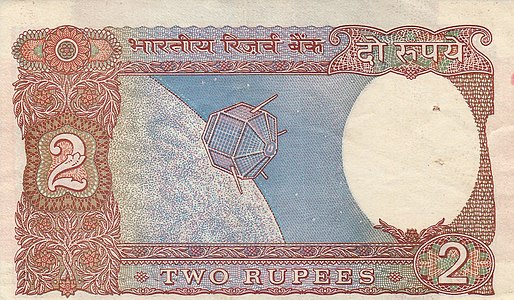
Legacy of Aryabhata and the Growth of India’s Space Program
Aryabhata’s success paved the way for more ambitious space projects in India. It demonstrated the potential of India’s scientists and engineers and laid the groundwork for future satellite missions. Under Satish Dhawan’s guidance, ISRO continued to evolve, and India began to develop its own launch vehicles, making it less dependent on foreign launch facilities.
The Satish Dhawan Space Centre SHAR Sriharikota, in particular, became a critical part of India’s space infrastructure. Today, the spaceport is home to the launch of India’s most advanced satellites and missions, including Chandrayaan and Mangalyaan, demonstrating India’s growing capability and ambition in space exploration.
India’s space program has grown in leaps and bounds, thanks in large part to the foundations laid by Dhawan and his team. From the early days of Aryabhata to the cutting-edge missions launched from Sriharikota, ISRO has become a symbol of national pride and scientific excellence.

Final Words: Satish Dhawan’s Vision Lives On
The story of Satish Dhawan and Aryabhata is one of resilience, determination, and visionary leadership. Dhawan’s role in the development of India’s space program cannot be overstated. He not only led ISRO to launch its first satellite but also helped build a culture of innovation and collaboration that continues to define the organization today.
The Satish Dhawan Space Centre SHAR stands as a tribute to his leadership, a place where India continues to push the boundaries of space exploration. And the legacy of Aryabhata, India’s first satellite, is a reminder that with dedication, collaboration, and vision, even the most ambitious dreams can be realized.
As we look to the future, it’s clear that Satish Dhawan’s contributions will continue to inspire generations of scientists and engineers. And in the photos from that fateful day in 1975, we see more than just the launch of a satellite—we see the birth of a new era for India in space exploration.
Leave a Reply